
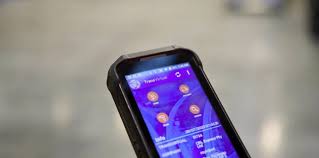
Every time your child unlocks their smartphone to check an assignment, text a friend, or research a topic for history class, they are holding the culmination of nearly two centuries of innovation. It is easy to take these devices for granted. They are our calendars, our libraries, our entertainment centres, and our connection to the world. Yet, the road to this pocket-sized supercomputer began with much humbler, clunkier, and noisier origins.
Understanding this evolution isn’t just about appreciating technology; it is about understanding how human connection has shifted. For students today—digital natives who have never known a world without instant access—learning the history of communication fosters a deeper appreciation for the tools they use.
It teaches resilience, innovation, and the power of human ingenuity. Just as we at Doon Edu believe in holistic growth and preparing students for the future, looking back at where we came from helps us understand where we are going.
This journey takes us from the static-filled wires of the 19th century to the wireless, high-speed networks that define our modern lives. It is a story of inventors who dared to dream big, transforming the way we live, learn, and connect.
The Dawn of Distance Communication: The Telegraph
Long before teenagers were texting emojis, the world’s fastest communication method involved tapping out dots and dashes. The story begins in 1837 with Samuel Morse and the invention of the telegraph. This was the “grandfather” of all modern telecommunications.
Before the telegraph, if you wanted to send a message from New York to London, it travelled at the speed of a ship. If you wanted to send a message to the next town over, it would travel at the speed of a horse. The telegraph changed everything. It revolutionised long-distance communication by transmitting messages in Morse code over wires. Suddenly, information could travel almost instantly.
However, it had significant limitations. It was restricted to sending coded text messages, which required skilled operators to encode and decode. You couldn’t just pick up a device and speak; you had to rely on a trained professional to tap out your thoughts. It was efficient for business and government, but it lacked the personal touch of the human voice. This limitation set the stage for the next great leap: the desire to transmit sound itself.
The Voice on the Line: Alexander Graham Bell and the Telephone
The frustration with the telegraph’s limitations led inventors to seek a way to send multiple messages over the same wire. In the process of trying to improve the telegraph, Alexander Graham Bell stumbled upon something far more revolutionary. In 1876, he patented the telephone.
The telephone brought the human element back into distance communication. No longer did you need to know Morse code or rely on an operator to translate your message. You could speak. This innovation laid the groundwork for the networks that would eventually carry mobile signals.
For decades, the telephone remained a tethered experience. To talk to someone, you had to be in a specific place—a home, an office, or a phone booth. The concept of being “mobile” was still a distant dream. But the infrastructure was being built. Wires were crisscrossing nations, connecting cities and towns, creating a web of connectivity that would eventually go wireless.
Cutting the Cord: The Birth of Radiotelephony
The transition from wired to wireless began in the early 20th century with the development of radio technology. Initially used for maritime communication (ships talking to shore), radio proved that voice could travel through the air without physical wires.
By the 1940s, we saw the first iterations of “mobile” phones. These weren’t the handheld devices we know today. They were massive, car-mounted units that filled an entire trunk. Equipment weighed up to 80 pounds, and using the service was complicated. You had to push a button to talk and release it to listen, much like a walkie-talkie.
Furthermore, the capacity was incredibly limited. In a major city, there might only be enough channels for a dozen people to make calls at the same time. If the channels were full, you waited. It was a far cry from the seamless connectivity we expect now, but it was a start. It proved that communication didn’t have to be anchored to a wall.
The Brick Era: First Generation (1G) Mobile Phones
The true mobile revolution began in 1973. Martin Cooper, an engineer at Motorola, made the first public mobile phone call on a handheld device. He called his rival at Bell Labs, Joel Engel, to announce his success—a moment of competitive triumph that changed history.
However, it took another decade for this technology to reach the public. In 1983, the Motorola DynaTAC 8000X was released.
Features of the DynaTAC 8000X:
- Weight: nearly 2 pounds (about the weight of a brick, hence the nickname).
- Cost: $3,995 (roughly $10,000 today when adjusted for inflation).
- Battery Life: 30 minutes of talk time.
- Charging Time: 10 hours.
These phones operated on 1G (First Generation) analog networks. The voice quality was often poor, calls dropped frequently, and security was nonexistent; anyone with a radio scanner could listen in on your calls. Despite these flaws and the exorbitant price tag, the demand was instantaneous. Business professionals saw the value of being reachable outside the office. It was a status symbol and a productivity tool rolled into one.
The Digital Shift: 2G and the Rise of Text Messaging
As the 1990s approached, mobile technology took a massive leap forward with the introduction of 2G. This second generation of mobile networks switched from analog to digital transmission.This shift brought several key improvements:
- Better Voice Quality: Digital signals were clearer and less prone to static.
- Security: Calls were encrypted, making eavesdropping much harder.
- SMS (Short Message Service): The birth of texting.
The first text message was sent in December 1992, reading simply “Merry Christmas.” At first, texting was clumsy. You had to press the number keys multiple times to get the right letter (a system known as T9). Yet, it resonated with younger generations. It was a quiet, quick, and cheaper way to communicate.
This era also saw phones shrinking in size. The “brick” was replaced by “candy bar” and “flip phone” designs. Nokia became a household name, producing durable phones with long battery lives and simple games like Snake. For the first time, mobile phones were becoming a consumer product for the masses, not just the wealthy elite.
The Data Revolution: 3G and the Mobile Internet
By the early 2000s, phones were doing more than just making calls and sending texts. They were starting to access the internet. However, 2G networks were painfully slow for data. Loading a basic webpage could take minutes.
Enter 3G. Launched in 2001, third-generation networks offered higher data transfer speeds. This opened the door for a new wave of functionality:
- Video Calling: Although grainy, people could see each other while talking.
- Mobile Web Browsing: Accessing email and basic websites became practical.
- GPS: Location services began to appear.
Devices like the BlackBerry dominated the business world during this time. With its full QWERTY keyboard, it allowed professionals to manage email on the go. The concept of the “always-on” employee was born.
The Game Changer: The iPhone and the Smartphone Era
While “smartphones” technically existed before 2007, they were often clunky, stylus-driven devices aimed at enterprise users. Then came Steve Jobs and the iPhone.
The iPhone didn’t just improve on existing features; it reimagined the interface entirely. It replaced the physical keyboard with a multi-touch screen. It introduced an operating system that felt intuitive and fluid.
Most importantly, it launched the App Store a year later.
The App Store model turned the phone into a blank canvas. Developers could create software for anything—games, productivity, social media, fitness tracking, and education. Suddenly, your phone wasn’t just a communication device; it was a flashlight, a map, a guitar tuner, and a portable classroom.
Android soon followed, creating a competitive ecosystem that drove rapid innovation. Screens got bigger, cameras became professional-grade, and processors became powerful enough to rival desktop computers.
The Speed of Life: 4G LTE and Streaming
As smartphones became more capable, they needed a network that could keep up. 4G LTE (Long-Term Evolution) arrived around 2010, delivering speeds roughly ten times faster than 3G.
This was the era of streaming.
High-definition video, video conferencing, and seamless online gaming became possible on mobile devices. Social media platforms evolved from text and static images to video-heavy feeds (think Instagram Stories and TikTok).
For education, 4G was transformative. Students could watch lecture videos on the bus, collaborate on cloud-based documents from a park, or participate in virtual classrooms. The walls of the traditional classroom were expanding, supported by the device in every student’s pocket.
The Present and Future: 5G and Beyond
We are now in the early stages of the 5G era. Fifth-generation networks promise speeds that are exponentially faster than 4G, with near-zero latency (lag).
While we are still exploring the full potential of 5G, the implications are vast:
- Augmented Reality (AR): Students could point their phones at a textbook diagram of the heart and see a 3D, beating model floating above the page.
- Internet of Things (IoT): Everything from school buses to classroom thermostats could be connected and optimised.
- Remote Learning: Holographic lectures could make remote students feel like they are sitting in the front row.
The evolution from the telegraph to 5G represents a relentless human drive to connect faster and more richly.
Education in the Age of Smartphones
For parents and educators, this rapid evolution presents both opportunities and challenges. At Doon Edu, we recognise that technology is a tool, not a replacement for fundamental skills.
The smartphone is a library of Alexandria in your child’s pocket. It offers access to the sum of human knowledge.
However, it also brings distractions—social media notifications, games, and the pressure of constant connectivity.
Finding the balance is key. In our structured boarding environment, we emphasise digital discipline. We teach students how to use technology to empower their growth, not hinder it. We leverage these tools for research and creative projects while ensuring there are “unplugged” times for face-to-face interaction, sports, and quiet reflection.
Just as the telegraph required a skilled operator to be useful, a smartphone requires a skilled user. We aim to shape students who are masters of their technology, using it to build a future-ready skillset that includes critical thinking, digital literacy, and ethical online behaviour.
Nurturing the Next Generation of Innovators
The story of the mobile phone is a testament to what happens when curiosity meets discipline. Samuel Morse, Alexander Graham Bell, and Martin Cooper—these were individuals who looked at the world as it was and imagined something better.
We want our students to have that same mindset. Whether they are interested in coding the next great app, engineering better networks, or simply using these tools to lead in other fields, we provide the environment where those ambitions can flourish.
From the simple dot-dash of Morse code to the complex algorithms of modern AI assistants, the history of mobile communication is a reminder that the future belongs to those who prepare for it. By understanding the past, our students are better equipped to shape the innovations of tomorrow.
Frequently Asked Questions
How does mobile technology impact student learning?
Mobile technology, when managed correctly, allows for personalised learning. Students can access educational apps, research instantly, and collaborate on projects. However, it requires a structured environment to ensure it remains a tool for learning rather than a source of distraction.
What was the first “smartphone”?
While the iPhone popularised the modern smartphone, the IBM Simon, released in 1994, is often considered the first. It featured a touchscreen, email capability, and built-in apps like a calendar and calculator.
Why is digital discipline important for teenagers?
Teenagers are at a developmental stage where impulse control is still developing. Digital discipline helps them manage screen time, prioritise academic and physical activities, and maintain mental well-being in a hyper-connected world.
Will 5G change how schools operate?
Yes, 5G will likely enable more immersive learning experiences through Virtual Reality (VR) and Augmented Reality (AR), allowing for virtual field trips and complex simulations that were previously impossible due to connection speeds.
Connecting the Dots
The evolution of the mobile phone is more than a timeline of gadgets; it is a reflection of our desire to be closer to one another. From the telegraph’s wires to the invisible waves of 5G, we have constantly sought to bridge distances.
For the students at Doon Edu, these devices are the starting line, not the finish. By fostering a safe and inspiring environment, we ensure that the next generation is ready not just to use the technology of the future, but to invent it. If you are looking for a school that balances modern innovation with timeless values of character and discipline, we invite you to explore what Doon Edu has to offer.
