
We live in an era where slow internet speeds rarely test patience, but are often tested by a blinking red battery icon. For the modern student and professional alike, a dead device is more than an inconvenience; it’s a disconnection from learning resources, communication, and productivity. This is why battery technology, specifically fast charging, has moved from a luxury feature to a necessity.
But what actually happens inside that sleek smartphone or laptop when you plug it into a high-speed brick? Is it safe? Does it damage the device over time? Understanding the physics and chemistry behind fast charging offers a fascinating glimpse into the kind of future-ready technology that is shaping our world.
It is a perfect example of how principles of physics, chemistry, and engineering converge to solve everyday problems—concepts that are central to a holistic STEM education.
This guide explores the mechanics of fast charging, breaking down the complex interplay of currents, chemistry, and safety protocols that keep our digital lives running.
The Basics: How Batteries Store Energy
To understand how we speed up the process, we first need to understand the baseline. Most modern portable devices use Lithium-ion (Li-ion) batteries. These batteries operate on a principle of moving ions between two electrodes: the cathode (positive) and the anode (negative).
When you use your device, lithium ions move from the anode to the cathode, generating electricity. When you charge the device, you use an external power source to force those ions back from the cathode to the anode, storing energy for later use.
Think of a battery like a sponge. When you are charging it, you are pouring water (energy) into the sponge. Standard charging is like using a kitchen faucet running at a steady, moderate pace. The sponge absorbs the water easily without splashing. Fast charging, however, is like attaching a fire hose. You are forcing a massive amount of water into the sponge very quickly.
This requires specialised engineering to ensure the sponge—and the room around it—doesn’t get ruined in the process.
Defining Fast Charging
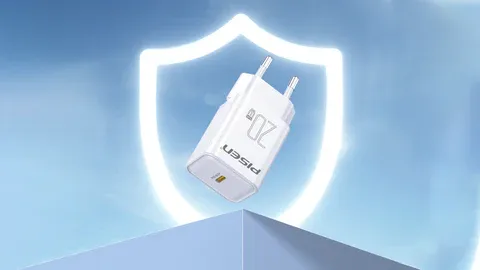
Technically speaking, a fast charging battery is designed to recharge significantly faster than traditional batteries by accepting higher electrical currents or optimising internal chemistry. While a standard USB port might deliver 2.5 to 5 watts of power, modern fast chargers can deliver anywhere from 18 watts to over 200 watts.
Unlike standard charging, which may take hours to move the needle, fast charging can replenish a battery to a substantial capacity—often 50% or more—in under 30 minutes. This capability relies on three critical pillars working in unison:
- Advanced Battery Management Systems (BMS)
- Specialised Power Bricks (Chargers)
- Compatible High-Throughput Cables
If any one of these components is missing, the system defaults to the slowest, safest speed.
The Physics: Voltage, Amperage, and Wattage
The speed of charging is determined by the total power delivered to the battery. In physics, this is calculated using a simple formula:
Wattage (Power) = Voltage (Pressure) x Amperage (Current)
To increase the speed (Wattage), engineers must increase either the Voltage or the Amperage.
The High-Voltage Approach
Some manufacturers increase the Voltage (pressure). Imagine using a garden hose. If you put your thumb over the opening, the pressure increases, and the water shoots out faster. By pushing more Voltage, you can transfer more energy without needing a thicker cable. However, high Voltage can generate excess heat inside the phone as it steps down that Voltage to a level the battery can safely accept.
The High-Amperage Approach
Other systems focus on increasing the Amperage (current). Returning to the water analogy, this is like using a wider pipe. You aren’t increasing the pressure, but you are allowing a much larger volume of water to flow through at once. This approach generally generates less heat inside the device but requires thicker, higher-quality cables capable of handling the electrical load without overheating.
The Charging Phases: Why It Slows Down
You may have noticed that fast charging is incredibly quick at first, but crawls toward the end. Your phone might fly from 0% to 50% in 15 minutes, but it takes another 40 minutes to get from 80% to 100%. This is not a malfunction; it is a safety feature known as the charging curve, which occurs in two distinct phases.
Phase 1: Constant Current (The Sprint)
When the battery is nearly empty, it can accept a high inflow of energy without overheating. During this phase, the charger pushes the maximum amount of current (Amperage) the battery can handle while the Voltage gradually rises. This is the “fast” part of fast charging. The ions can easily find empty spaces in the anode so that the energy can be rushed in.
Phase 2: Constant Voltage (The Cool Down)
As the battery fills up, the ions have a harder time finding space in the anode. If the charger kept forcing energy in at the same rate, it would generate dangerous amounts of heat and potentially cause the battery to fail or degrade rapidly.
Once the battery reaches a certain voltage (usually around 70-80%), the system switches to Constant Voltage mode. The current is gradually reduced (trickle charging) to top off the battery gently. This is why manufacturers often advertise “50% in 15 minutes” rather than “100% in 30 minutes”—the last stretch is intentionally slow to protect the battery’s health.
The Brain of the Operation: Battery Management Systems
The true hero of fast charging isn’t the power brick; it is the Battery Management System (BMS). The BMS is a dedicated computer chip inside your device that monitors the battery’s health, temperature, and voltage levels in real-time.
Before any fast charging begins, a “handshake” occurs. When you plug in a cable, the charger and the phone’s BMS communicate.
- Phone: “I can handle 65 watts right now.”
- Charger: “I can deliver 65 watts. Let’s go.”
- If the phone gets too hot during the process, the BMS steps in immediately.
- Phone: “My temperature is rising. Drop the power to 20 watts.”
- Charger: “Understood. Dropping power.”
This constant communication ensures that the massive amount of energy being transferred doesn’t result in overheating or fire. It creates a safe environment where technology serves the user without risk.
The Chemistry: How Batteries Are Changing
While the BMS manages the flow of electricity, chemists and material scientists are working to improve the battery itself. Standard Li-ion batteries have physical limitations. Suppose you force ions to move too fast. In that case, they can create “traffic jams” that lead to lithium plating—a phenomenon where metallic lithium builds up on the anode, permanently reducing battery capacity.
To combat this, manufacturers are innovating on the cellular level:
Thicker Electrodes and New Materials
Newer batteries utilise anode materials like silicon-graphene composites. These materials are more conductive and can absorb lithium ions much faster than traditional graphite anodes without degrading.
Dual-Cell Architecture
Some high-performance devices split the battery into two separate cells. Instead of charging one large battery at 40 watts, the system charges two smaller batteries at 20 watts each simultaneously. This doubles the charging speed while keeping the heat generation of each individual cell low.
This is a brilliant example of lateral thinking in engineering—solving a problem not by brute force, but by redesigning the system architecture.
Standardisation vs. Proprietary Tech
One of the most confusing aspects for consumers is the array of charging standards. Not all cables and bricks are created equal.
USB Power Delivery (USB-PD)
This is the universal standard intended to work across different devices. If you have a USB-PD charger, it can fast-charge your iPhone, your Android device, and even your laptop. It is an intelligent protocol that negotiates the best speed for the connected device.
Proprietary Standards
Many companies develop their own “walled garden” charging tech (like Qualcomm Quick Charge, OnePlus Warp Charge, or OPPO SuperVOOC). These systems often move some of the charging circuitry from the phone to the power brick to keep the phone cooler. However, they usually require the specific cable and brick that came in the box.
Using a generic cable with these systems often results in slow charging speeds because the proprietary “handshake” cannot happen.
Dispelling the Myths: Heat and Degradation
Parents and students often ask: Does fast charging ruin the battery life?
The answer is nuanced. Heat is the enemy of all batteries. Historically, fast charging generated significant heat, which accelerated the chemical aging of the battery. However, modern BMS technology and dual-cell designs have largely mitigated this risk.
While it is true that slower charging is technically gentler on a battery chemically, the difference in degradation between a modern device that is fast-charged and one that is slow-charged is becoming negligible for the average user. The convenience of getting a day’s power in 20 minutes usually outweighs the loss of a small percentage of battery health over two or three years.
Furthermore, most degradation happens when a battery is kept at 100% or 0% for long periods. Fast charging systems are smart enough to manage the speed to avoid keeping the battery in these stress zones for longer than necessary.
The Future: Solid-State and Beyond
As impressive as current technology is, we are on the cusp of a revolution. The next frontier is the Solid-State Battery.
Current batteries use a liquid electrolyte solution to move ions. This liquid is flammable and sensitive to temperature. Solid-state batteries replace this liquid with a solid material. This change makes the battery incredibly safe, fire-resistant, and capable of holding much more energy.
More importantly for speed, solid-state batteries can move ions significantly faster. We are looking at a future where charging a phone from 0 to 100% could take minutes, and charging an electric vehicle could take the same amount of time as filling a gas tank.
Why This Matters for Students
Understanding battery technology isn’t just about knowing which charger to buy. It is about understanding the constraints and opportunities of the energy that powers our world.
As we move toward a greener future, energy storage is the biggest hurdle we face. The students learning about Voltage and chemical resistance today are the engineers who will design the grid-scale batteries of tomorrow. They will solve the problems of renewable energy storage and electric transportation.
At Doon Edu, dissecting the technology in our pockets is the first step toward understanding the technology that will save our planet. It turns a passive consumer experience (“my phone is charging”) into an active learning opportunity (“electrons are flowing through a silicon-graphene anode”).
Empowering the Next Generation
Fast charging is a marvel of modern engineering, balancing raw power with delicate chemical preservation. It relies on a symphony of physics, chemistry, and computer science working in harmony.
For parents, understanding this helps in choosing the right tools for their children’s digital learning. For students, it serves as a reminder that science isn’t just in textbooks—it is in the palm of their hands.
As technology continues to accelerate, fostering a deep curiosity about how things work is essential. Whether it is the chemistry of a battery or the coding of an app, these are the building blocks of a future-ready education.
