
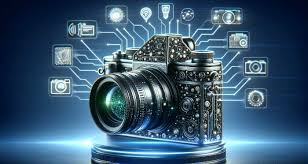
Before discussing what artificial intelligence (AI) is, it is worth saying a few words about natural intelligence. As cognitive scientists understand the term, intelligence is a mental quality that allows a person to perceive and analyse information, summarise it, draw conclusions, and act on them.
It is this very process of perception and analysis that camera engineers are now attempting to replicate—and in many ways, surpass—within the palm of your hand.
For decades, photography was a mechanical art. It relied on the physical properties of glass lenses, the sensitivity of chemical film (and later, digital sensors), and the skill of the photographer to balance light, aperture, and shutter speed. Today, that paradigm has shifted entirely. We are no longer just capturing light; we are computing it.
The modern smartphone camera is a marvel of “computational photography,” where hardware limitations are overcome by immense processing power.
This fusion of advanced multi-lens hardware and sophisticated AI software has democratised professional-quality imaging. It allows a teenager to shoot a cinematic portrait that would have once required a $3,000 DSLR and studio lighting.
For students interested in technology, art, or media, understanding these systems isn’t just about taking better selfies—it’s about understanding the future of visual communication.
The Evolution from Single to Multi-Lens Systems
The most visible change in modern camera technology is the sheer number of “eyes” on the back of our devices. Not long ago, a single lens was the standard. Now, it is common to see three, four, or even five distinct lenses on a flagship smartphone. But why?
Overcoming Physics with Redundancy
Traditional cameras rely on large lenses to zoom. To make a subject appear closer, you need a longer focal length, which physically requires a longer lens barrel. Smartphones, however, must remain thin enough to slip into a pocket. Engineers cannot simply attach a six-inch lens to a phone without destroying its form factor.
The solution was the multi-lens system. Instead of one lens that tries to do everything (and fails to do it all well), manufacturers split the job across specialised hardware:
The Wide Lens (Main): This is the workhorse, usually offering the best aperture and largest sensor for everyday shooting.
The Ultra-Wide Lens: This lens has a much shorter focal length, allowing it to capture a wider field of view—perfect for landscapes or tight interior spaces.
The Telephoto Lens: This lens has a longer focal length, providing optical zoom (usually 2x to 10x) without the digital degradation that comes from simply cropping an image.
By switching between these lenses seamlessly, the phone simulates the experience of using a zoom lens on a professional camera. But the real magic happens when they work together.
Stereoscopic Vision and Depth Mapping
Having multiple lenses allows the camera to see in 3D, much like human eyes. When two lenses capture the same scene from slightly different angles, the software can calculate the distance to various objects in the frame. This is known as depth mapping.
Depth mapping is the secret sauce behind “Portrait Mode.” By understanding what is in the foreground (the subject) and what is in the background, the camera can artificially apply a blur effect (bokeh) to the background while keeping the subject sharp. Early versions of this were clumsy, often blurring strands of hair or ears. Today, thanks to higher-resolution sensors and better parallax data from multi-lens arrays, the separation is often indistinguishable from optical blur.
The Brain Behind the Shutter: AI in Photography
While multi-lens systems provide the raw optical data, Artificial Intelligence is the artist that paints the final image. This is where “computational photography” takes centre stage.
Semantic Segmentation
One of the most powerful applications of AI in photography is semantic segmentation. This is the computer’s ability to identify and label specific parts of an image.
When you point your camera at a scene, the AI doesn’t just see a grid of colored pixels. It recognises “sky,” “grass,” “dog,” “face,” and “building.” Once it identifies these elements, it can process them individually.
Sky: The AI might darken the blue and boost contrast to make clouds pop, without darkening the person standing in the foreground.
Faces: It can identify skin tones and apply subtle smoothing or lighting correction, while leaving the texture of the person’s clothing sharp and detailed.
Foliage: It can boost the saturation of greenery to make a landscape look more vibrant.
This happens in milliseconds, often before you even press the shutter button. The result is an image that looks “better” than reality because it has been optimised element-by-element to appeal to the human eye.
Night Mode and Low Light Innovation
Historically, low light was the enemy of small camera sensors. Small sensors capture less light, resulting in grainy, dark, or blurry photos. AI revolutionised this with “Night Mode.”
When you take a photo in low light, the camera doesn’t just take one picture. It captures a rapid burst of images at different exposure levels—some short to capture detail and prevent blur, some long to gather light. The AI then aligns these images (compensating for the natural shake of your hand) and merges them.
It analyses the stack of images to find the sharpest pixels, reduces the random colour noise that appears in dark areas, and stitches together a final photograph that is bright, clear, and detailed. This process, known as image stacking, allows a phone to see in the dark better than the human eye in some instances.
Super Resolution and AI Zoom
Digital zoom used to be a dirty word in photography. It meant cropping into an image and enlarging the pixels, resulting in a blocky, low-quality mess.
AI has introduced “Super Resolution.” When you zoom in digitally, AI algorithms can predict what the missing detail should look like based on vast databases of reference images. It fills in the gaps, smoothing out edges and adding texture where a simple crop would be blurry.
Furthermore, hybrid zoom systems combine optical data from the telephoto lens with digital information from the main high-resolution sensor. The AI fuses these data streams to create a zoomed image that retains surprising clarity, even at 30x or 100x magnification.
The Future of Visual Education
For the next generation, these technologies are not just consumer conveniences; they are tools for creativity and learning.
Accessible Creativity
In an educational setting, high-quality cameras in students’ pockets mean that visual storytelling is accessible to everyone. A student doesn’t need expensive gear to film a documentary for history class, document a science experiment in high definition, or create a portfolio for art school. The barrier to entry has been lowered, allowing talent and vision to shine through regardless of budget.
Understanding AI Bias and Ethics
As cameras become smarter, they also raise important questions that students must learn to navigate. AI algorithms are trained on datasets, and if those datasets are biased, the camera’s decisions will be too.
For example, early face-detection algorithms struggled to recognise darker skin tones, or AI beauty filters would automatically lighten skin or alter facial features to match a specific (often Eurocentric) standard of beauty.
Teaching students how these systems work—and how they can fail—is a crucial part of digital literacy. They need to understand that a photo is no longer just an objective capture of reality; it is an interpretation made by an algorithm.
Why Technical Literacy Matters
At Doon Edu, we believe that understanding the technology behind the tools we use is as important as using them. Whether a student dreams of being a computer scientist developing the next generation of neural networks or a journalist who needs to understand the veracity of a digital image, technical literacy is key.
The integration of complex hardware like multi-lens arrays with abstract software concepts like neural networks is a perfect case study for holistic learning. It bridges physics (optics), mathematics (algorithms), art (composition), and ethics (AI bias).
As we look toward the future, the camera will evolve even further. We may see the end of the traditional shutter button, replaced by cameras that are constantly buffering and waiting for the perfect moment. We might see the integration of augmented reality (AR) where the camera doesn’t just record the world, but annotates it with information in real-time.
Preparing students for this future involves more than just classroom lectures. It requires an environment that encourages curiosity, questions how things work, and explores the implications of new technology. By fostering a deep understanding of these innovations, we empower the next generation to be not just consumers of technology, but creators and ethical stewards of it.
