
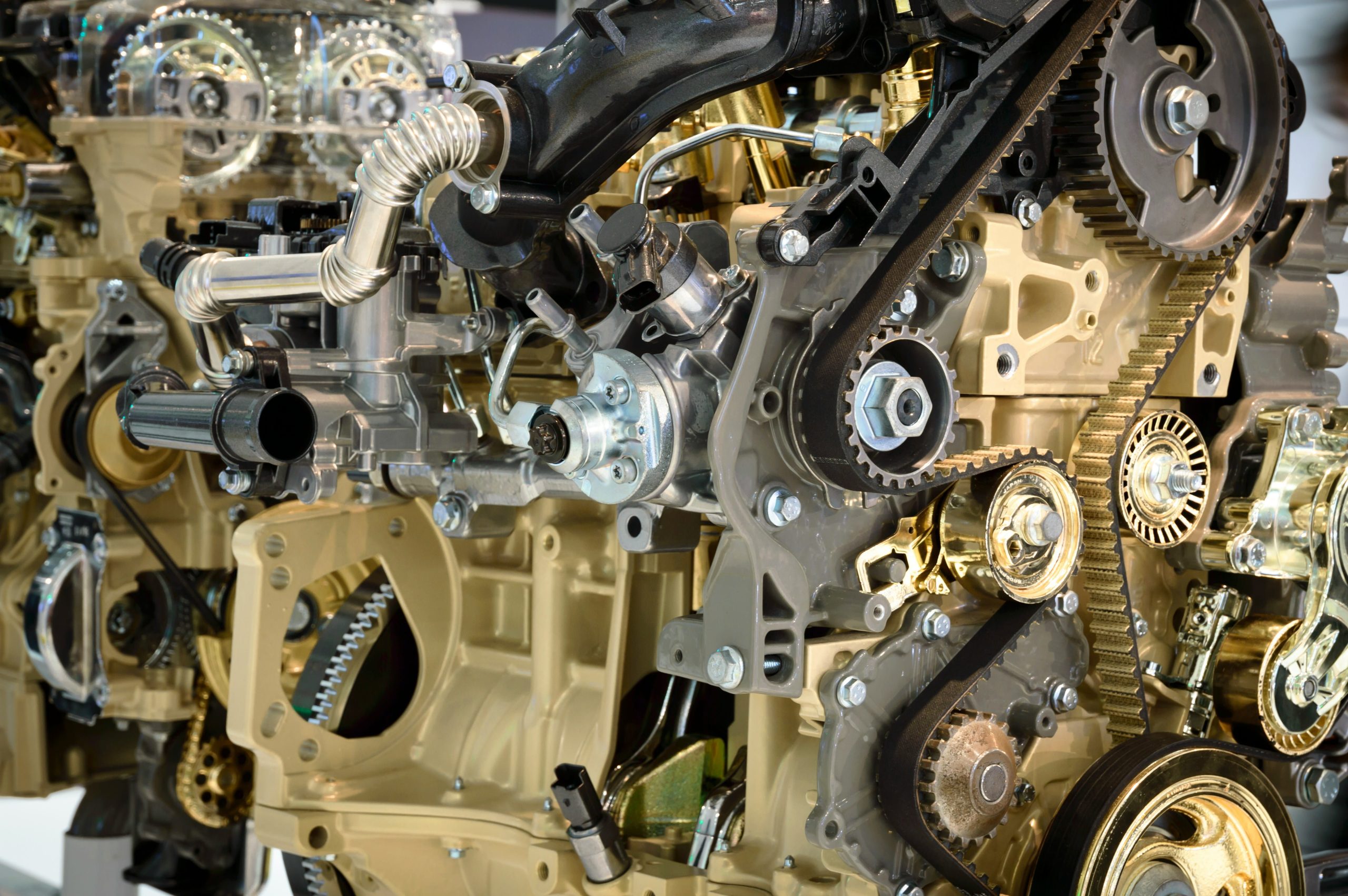
When you hear the terms “gearbox” and “transmission,” you might think they’re interchangeable. While they are closely related and work together, they serve distinct functions. Understanding the difference is key to grasping how power is managed in machines, from your family car to industrial equipment.
This guide will break down the mechanics of both gearboxes and transmissions. We’ll explore their individual roles, how they collaborate to make things move, and the various types you’ll find across different applications. By the end, you’ll have a clear picture of these essential mechanical systems and why their proper function is critical for performance and efficiency.
What is a Gearbox?
A gearbox, also known as a gear reducer, is a self-contained system of gears housed within a casing. Its primary job is to modify the speed (RPM) and torque of a power source. Think of it as a mechanical intermediary that adjusts the power output to meet specific needs.
At its core, a gearbox uses a set of integrated gears to alter the relationship between speed and torque. When a smaller gear (pinion) drives a larger gear, the output speed decreases, but the torque increases. Conversely, when a larger gear drives a smaller one, the speed increases while the torque decreases. This fundamental principle allows a single motor to perform a variety of tasks that require different levels of force and speed.
The gears themselves can be of various types, each suited for particular applications:
Spur Gears: The most common type, with straight teeth mounted on parallel shafts. They are simple and efficient for moderate speeds.
- Helical Gears: These have teeth cut at an angle to the gear’s axis. This design allows for smoother, quieter operation than spur gears, making them suitable for high-speed applications.
- Bevel Gears: Shaped like cones, these gears transmit power between shafts that intersect, typically at a 90-degree angle.
- Worm Gears: This setup involves a screw-like “worm” that meshes with a gear. They offer a large reduction in speed in a compact space and can prevent back-driving, which is useful for applications like conveyor belts and lifts.
A gearbox is a component within a larger transmission system. It is a vital part, but it doesn’t encompass the entire power delivery mechanism on its own.
What is a Transmission?
A transmission is a more comprehensive system that includes the gearbox along with other critical components designed to transfer power from an engine to the drive wheels or other final output. The transmission’s overall purpose is to manage the engine’s power effectively, allowing the machine to operate at various speeds and under different load conditions.
The transmission as a whole consists of:
- The Gearbox: The heart of the transmission, containing the gear sets that provide different gear ratios.
The Clutch (in manual transmissions): A mechanism that engages and disengages the engine from the gearbox, allowing the driver to change gears without damaging the system. - The Torque Converter (in automatic transmissions): A fluid coupling that serves a similar purpose to a clutch, allowing the engine to idle while the vehicle is stopped and smoothly transmitting power as it accelerates.
- Shafts: Input and output shafts that transmit power into and out of the gearbox.
- Shifting Mechanism: The system (manual or automatic) that selects the appropriate gear ratio.
The transmission ensures that the engine can operate within its optimal power band—the range of RPMs where it produces power most efficiently. Without a transmission, a vehicle’s engine would be directly connected to the wheels, meaning it would have only one gear. This would make it incredibly difficult to start from a standstill and would severely limit its top speed.
The Gearbox’s Role Within the Transmission
- To put it simply: the gearbox is a crucial part of the transmission. It’s the component responsible for the “gearing” part of the power transfer process. The transmission is the entire assembly that delivers that power from start to finish.
Imagine you’re riding a multi-speed bicycle. The set of sprockets (gears) on the back wheel, along with the front chainrings, act as the gearbox. They allow you to change your gear ratio. The entire system—including the chain, pedals, and derailleurs that shift the chain—is the transmission. The gearbox provides the different ratios, but the transmission is the complete system that makes use of them to get you up a hill or speeding along a flat road.
In a car, the same logic applies. The gearbox contains the physical gears that provide the first gear, the second gear, and so on. The transmission includes this gearbox plus the Clutch or torque converter, the driveshaft, and the differential that ultimately sends power to the wheels.
Types of Transmissions and Their Applications
Transmissions are designed to meet the unique demands of different machines. While the core principle remains the same, the execution varies significantly.
Manual Transmissions
Manual transmissions require the operator to use a clutch to disconnect the engine from the gearbox and manually select the next gear using a shift lever.
- How it Works: The driver presses the clutch pedal, which disengages the engine’s power flow. They then move the shifter to select the desired gear, which physically moves gear selectors inside the gearbox.
Releasing the Clutch re-engages the engine, now at the new gear ratio.
- Pros: Generally offer better fuel efficiency, more direct driver control, and are often simpler and cheaper to repair.
- Cons: Require more driver effort, especially in stop-and-go traffic, and have a steeper learning curve for new drivers.
- Applications: Common in sports cars for an engaging driving experience, economy cars for cost-effectiveness, and heavy-duty trucks where precise control over gearing is needed for hauling heavy loads.
Automatic Transmissions
Automatic transmissions change gear ratios automatically without any direct input from the driver.
- How it Works: Instead of a clutch, they use a torque converter. A system of planetary gearsets, controlled by hydraulic pressure and electronic solenoids, engages different gear ratios based on vehicle speed, engine load, and throttle position.
- Pros: Easy to use, provide a smooth driving experience, and are ideal for city driving.
- Cons: Can be less fuel-efficient than manuals, are more complex and expensive to repair, and offer less direct control.
- Applications: The most common type of transmission in passenger cars and SUVs today is due to their convenience and comfort.
Continuously Variable Transmissions (CVT)
CVTs don’t have a fixed number of gears. Instead, they can provide a seamless range of gear ratios.
- How it Works: Most CVTs use a system of two pulleys connected by a steel belt or chain. One pulley is connected to the engine, the other to the wheels.The pulleys can change their diameter, which alters the gear ratio infinitely within a set range. This allows the engine to always stay at its most efficient RPM.
- Pros: Excellent fuel economy, exceptionally smooth acceleration with no “shift shock,” and efficient power delivery.
- Cons: Some drivers dislike the lack of distinct gear shifts, and they can sometimes produce a droning engine note. Early models also had reliability issues, though modern CVTs are much more robust.
- Applications: Widely used in hybrids, scooters, and many economy-focused cars from manufacturers like Nissan, Honda, and Subaru.
Dual-Clutch Transmissions (DCT)
A DCT is an automated manual transmission that uses two separate clutches for odd and even gear sets.
- How it Works: One Clutch controls the odd-numbered gears (1, 3, 5, 7), while the other controls the even-numbered gears (2, 4, 6). While one gear is engaged, the computer pre-selects the next gear on the other Clutch. This allows for lightning-fast gear changes, often in milliseconds.
- Pros: Combines the efficiency of a manual with the convenience of an automatic. Delivers very fast shifts and excellent performance.
- Cons: Can sometimes be jerky at low speeds, and they are more complex and costly than traditional automatics.
- Applications: Popular in high-performance sports cars from brands like Porsche (PDK), Volkswagen/Audi (DSG), and Ferrari, where quick shifts are paramount.
Beyond Automotive: Gearboxes in Other Applications
The principles of gearboxes and transmissions extend far beyond cars.
- Industrial Machinery: Industrial gearboxes are used in everything from conveyor belts and mixers to wind turbines. In a wind turbine, a large gearbox is needed to increase the slow rotation of the blades (around 15-20 RPM) to the high speed required by the generator (over 1,500 RPM).
- Agricultural Equipment: Tractors use complex transmissions with many gears to provide the high torque needed to pull heavy implements at slow speeds, as well as higher speeds for transport.
- Marine Applications: Boats use marine transmissions (gearboxes) to transfer power from the engine to the propeller. These gearboxes also provide a neutral gear and a reverse gear, allowing the boat to maneuver effectively.
- Bicycles: As mentioned, a bicycle’s gearing system is a perfect, simple example of a transmission. It allows the rider to adjust their pedal effort to match the terrain, demonstrating the core function of managing speed and torque.
Your Next Steps in Mechanical Knowledge
While they work hand-in-hand, the gearbox and transmission are not the same. The gearbox is the component with the gears that change speed and torque, while the transmission is the complete system that delivers power from the engine to the final output. From the manual shifter in a classic sports car to the complex systems in a modern wind turbine, understanding this relationship is fundamental to appreciating mechanical engineering.
By grasping how these components function, you gain insight into the efficiency, performance, and design of countless machines that shape our world. This knowledge provides a solid foundation, whether you’re looking to maintain your own vehicle or explore a future in an engineering field.
