
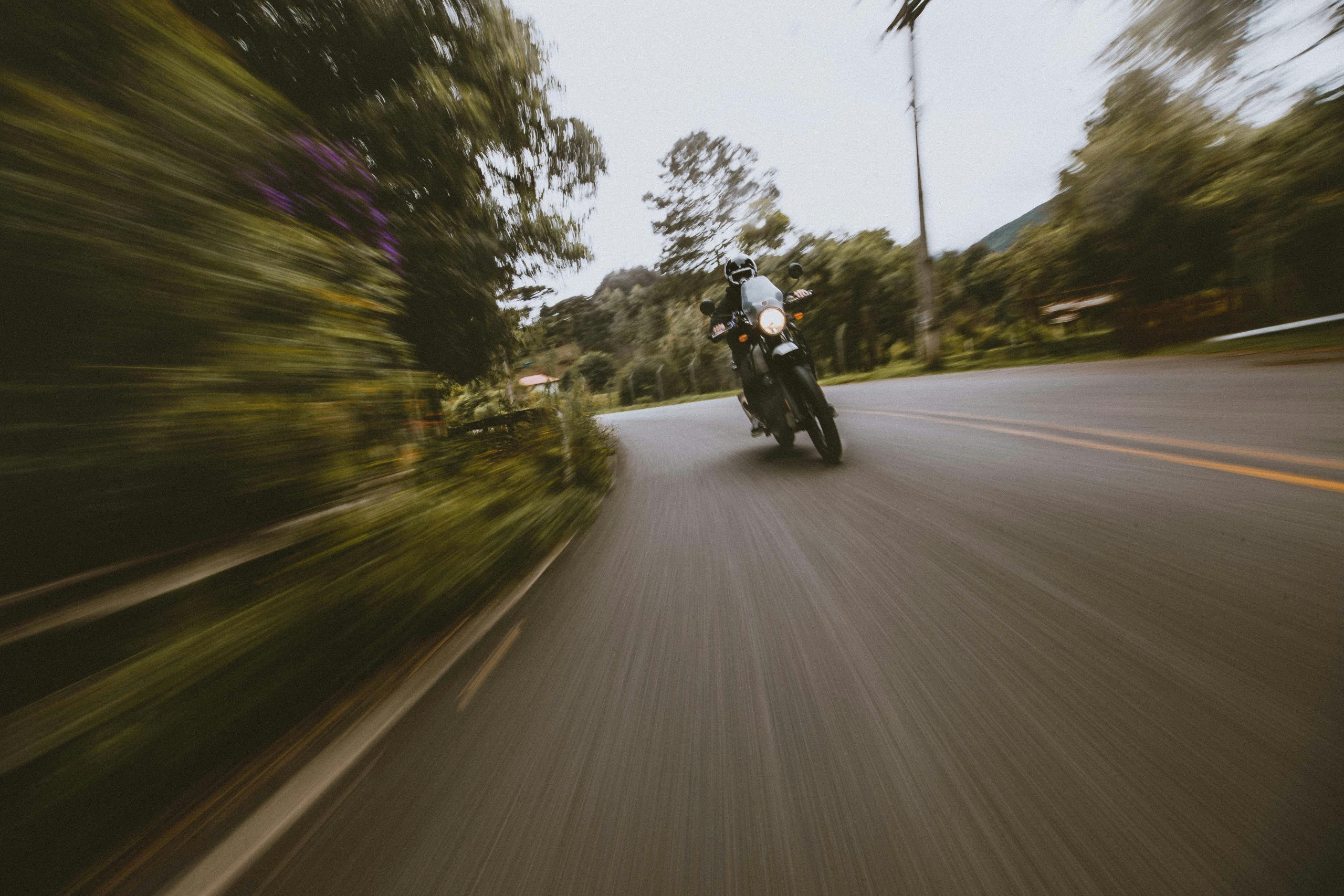
The open road offers a sense of freedom that few other experiences can match. Whether you’re commuting to work or taking a weekend trip through the countryside, riding a motorcycle or bicycle brings you closer to your environment in a way that driving a car simply cannot. However, that lack of a steel cage around you means you are far more vulnerable. The reality is stark: motorcyclists and cyclists face significantly higher risks of injury in the event of an accident than occupants of passenger vehicles.
While you cannot control the actions of others—the distracted driver texting at a red light, the commuter eating breakfast while merging, or the aggressive driver weaving through traffic—you can control how you react to them. This is where defensive riding comes in. It isn’t just a set of rules; it’s a mindset. It is the proactive practice of anticipating hazards before they happen and placing yourself in the safest possible position on the road.
Mastering defensive riding doesn’t take the joy out of the ride. In fact, it enhances it. By feeling confident in your ability to handle the unexpected, you can relax and enjoy the journey, knowing you have the skills to protect yourself. In this guide, we will explore comprehensive strategies to keep you upright, visible, and safe.
The Core Philosophy: Assume You Are Invisible
The most dangerous assumption a rider can make is that other drivers see them. In many accident reports, the driver of the car says, “I never even saw them.” This isn’t always malice; it’s often a phenomenon known as “inattentional blindness.” Drivers are psychologically programmed to look for other cars, trucks, and buses—large objects that pose a threat to them. A motorcycle or bicycle often doesn’t register in their quick visual scan.
To combat this, you must ride with the mindset that you are invisible. Do not assume a driver will yield the right of way, even if you are legally entitled to it. Please do not assume a driver sees you in their blind spot. By operating under the assumption that you haven’t been seen, you naturally adopt a more cautious and prepared riding style.
Improving Your Visibility
While you should assume you are invisible, you should still do everything in your power to be seen.
- Gear Selection: Wear bright, high-visibility clothing. A fluorescent yellow or orange jacket or helmet significantly increases the chance that a driver’s eye will catch you. Retro-reflective tape on your bike and gear is essential for night riding.
- Lane Positioning: Position yourself in the lane where you are most visible to the driver ahead of you and the traffic behind you. Avoid riding in the centre of the lane where oil and debris accumulate; instead, ride in the left or right wheel tracks where car tyres have cleared the path.
- Communication: Use your signals early. Flash your brake light before stopping to alert the driver behind you. Use hand signals if necessary to emphasise your intentions.
Managing Space and Buffer Zones
Space is your best friend on the road. The more space you have around your bike, the more time you have to react to a hazard. If you are boxed in by traffic, your escape routes are eliminated.
The Two-Second Rule
At a minimum, maintain a two-second following distance behind the vehicle in front of you. This is the time it takes for you to perceive a hazard, process it, and begin to brake. To measure this, pick a fixed object on the road (like a sign or a tree). When the vehicle ahead passes it, count “one-thousand-one, one-thousand-two.” If you pass the object before you finish counting, you are too close. In wet weather or poor visibility, increase this to four seconds or more.
Creating a Safety Bubble
Try to maintain a “safety bubble” of space around you.
- Front: Keep your following distance.
- Sides: Avoid riding directly alongside other vehicles. If they swerve or change lanes without looking, you have nowhere to go. Stagger your position so you are either ahead of or behind the vehicle in the adjacent lane.
- Rear: You cannot control the driver behind you, but you can manage the risk. If someone is tailgating you, do not speed up to create distance; they will likely speed up with you. Instead, slow down gradually to increase the gap in front of you, or change lanes to let them pass.
Intersection Awareness: The Danger Zone
Intersections are the most common site of motorcycle and bicycle accidents. This is where traffic paths cross, and the potential for conflict is highest. The most frequent scenario involves a vehicle turning left across the path of an oncoming rider.
Approach with Caution
As you approach an intersection, cover your brakes (place your fingers over the brake lever) and roll off the throttle. This reduces your reaction time if you need to stop suddenly. Scan the intersection for:
- Vehicles waiting to turn left.
- Traffic approaching from the right may run a red light or stop sign.
- Pedestrians stepping off the curb.
- Lane Position at Intersections
Move to the side of the lane that offers the best line of sight. If a large truck is turning left in the opposite lane, it may block the view of a car behind it that is also turning left. Adjust your position so you can see and be seen.
The “Open” Zone
When stopped at a light, keep your bike in first gear (for motorcycles) and watch your mirrors. If a car approaches from behind and doesn’t look like it’s stopping, you need to be ready to move into an escape path—perhaps between lanes or onto the shoulder—instantly. Never trap yourself directly behind a vehicle without an exit route.
Anticipating Driver Behaviour
Defensive riding involves reading the road and predicting what other road users will do before they do it. It’s about recognising subtle cues that indicate a potential threat.
The “Body Language” of Vehicles
Cars give off clues.
- Turning Wheels: If you see a car waiting to pull out from a side street, watch its front wheels. If they start to turn or roll, the driver is committing to the move, regardless of whether you are there.
- Drifting: A car drifting within its lane might indicate a distracted driver (texting or eating) or someone preparing to change lanes without signalling.
- Head Movements: If you can see the driver’s head turning or checking mirrors, they are likely planning a maneuver.
The Distracted Driver Epidemic
As mentioned in the outline, distraction is a major cause of accidents. Modern dashboards are complex, phones are addictive, and people often treat their cars like living rooms. If you see a driver looking down (likely at a phone), eating, or turning around to discipline children, give them a wide berth. Assume their driving will be erratic and unpredictable.
Handling Curves and Corners
Corners are where single-vehicle motorcycle accidents often occur. Entering a curve too fast or panicking mid-turn can lead to running off the road or sliding out.
Slow In, Fast Out
The golden rule for cornering is to enter at a speed that allows you to accelerate through the turn. Do all your braking before the turn while the bike is upright. Look through the turn to where you want to go (visualise the exit), lean the bike, and gently roll on the throttle to maintain stability.
vanishing Points
Watch the “vanishing point”—the spot where the road edges seem to meet in the distance.If the vanishing point is moving away from you, the curve is opening up, and you can accelerate.
If the vanishing point is moving closer to you, the curve is tightening. You need to slow down or
- maintain speed; do not accelerate.
- Surface Hazards and Weather
- Two wheels are inherently less stable than four, making road surface conditions critical.
The Slick Stuff
Be hyper-aware of changes in road texture.
- Painted Lines: Crosswalks and lane markers become incredibly slippery when wet. Avoid braking or leaning hard while riding over them.
- Manhole Covers and Steel Plates: Metal surfaces offer zero traction in the rain.
- Gravel and Sand: These often accumulate at intersections and in corners. If you hit a patch of gravel mid-corner, do not panic and grab the brakes. Keep the bike as upright as possible and ride through it smoothly.
The First Rain
The first 15 to 30 minutes of rainfall are the most dangerous. The water mixes with oil and grease that has built up on the road surface, creating a slick, ice-like layer. If it starts to rain, it is often safer to pull over and wait for the heavy rain to wash the oil away before continuing.
Mental Preparedness and Attitude
Your bike is a machine; it only does what you tell it to do. Therefore, the most critical safety component is your mind.
Ride Your Own Ride
Group riding can be fun, but it can also pressure you to ride beyond your skill level. If the group is riding faster than you are comfortable with, let them go. Catch up at the next stop. Trying to keep up with more experienced riders on unfamiliar roads is a recipe for disaster.
The Influence of Emotion
Never ride when you are angry, stressed, or exhausted. These states compromise your judgment and reaction times. Riding requires 100% of your focus. If your mind is on an argument you had at work, it isn’t on the car pulling out in front of you.
Continuous Learning
A license is just the beginning. The best riders never stop learning. Consider taking advanced riding courses. These classes teach emergency braking, obstacle avoidance, and advanced cornering techniques in a controlled environment. They provide tools that could save your life in a split-second emergency.
- Emergency Maneuvers: The Last ResortDespite your best planning, you may face a situation where a collision is imminent. Practising emergency maneuvers can
make the difference between a close call and a crash.
Emergency Braking
The goal is to stop in the shortest distance possible without locking the wheels.
- Progressive Squeeze: Apply the front brake smoothly and progressively. As the weight transfers to the front wheel, the tyre gains traction, allowing you to squeeze harder. Grabbing the brake lever abruptly will lock the wheel and cause a crash.
- Rear Brake: Use the rear brake, but be gentle. As the weight transfers forward, the rear wheel becomes light and easy to lock up
Swerving
Sometimes you cannot stop in time, and you must swerve to avoid an object.
- Push Steering: To swerve right, push forward on the right handlebar. To swerve left, push forward on the left handlebar.
- Separation: Never brake and swerve at the same time. Brake first to scrub off speed, release the brakes, then swerve. Traction is limited; asking the tyre to brake and turn simultaneously often exceeds its grip limit.
Investing in Your Safety
Defensive riding is a lifelong commitment. It is about stacking the odds in your favour every time you throw a leg over the saddle. By assuming invisibility, managing your space, anticipating the mistakes of others, and keeping your skills sharp, you transform yourself from a passive participant in traffic to an active guardian of your own safety.
The road is shared, but the responsibility for your survival ultimately rests in your gloved hands. Embrace the mindset of the defensive rider. It ensures that the freedom and thrill of the ride remain a joy for years to come.
