
For the last decade, the smartphone industry settled into a comfortable, albeit predictable, rhythm. Each year brought faster processors, slightly better cameras, and brighter screens, but the fundamental shape of the device remained unchanged: a rigid, rectangular slab of glass and metal. Consumers knew exactly what to expect, and manufacturers knew exactly what to sell. It was a safe era for mobile technology, but a boring one.
That era of predictability has officially shattered. Innovation has returned to the high-end mobile game with a vengeance, driving a wedge between manufacturers playing it safe and those daring to reimagine the very form of personal computing. While the release of the iPhone 16 solidified Apple’s dominance in the traditional premium market, the real excitement was happening elsewhere. Competitors were not just refining the smartphone; they were physically transforming it.
We are witnessing a technological arms race that goes far beyond megapixel counts or battery life. This is a battle for the shape of the future. On one side, we have the maturation of foldable devices, highlighted by Huawei’s audacious triple-folding Mate XT. On the other hand, we have the looming giant of Samsung, rumoured to be pivoting from folds to something even more futuristic: the rollable display. As these tech titans trade blows, the consumer is left with a dazzling, if confusing, array of choices that promise to merge the portability of a phone with the utility of a tablet.
The Evolution of the Foldable Market
To understand where we are going with rollables, we have to look at the foundation laid by foldables. When the first foldable phones hit the market a few years ago, critics were sceptical. Early models were fragile, expensive, and plagued by software that didn’t quite know how to handle a shifting screen size. However, the last few generations of devices have silenced many of those doubters.
The “book-style” foldable has established itself as a legitimate productivity tool. By opening up to reveal a mini-tablet screen, these devices offer multitasking capabilities that standard phones cannot match. You can run a spreadsheet on one side and a video call on the other, or drag and drop photos directly into an email.
The “clamshell” style, reminiscent of the flip phones of the early 2000s, offered a different appeal: compactness. It took a standard large screen and folded it in half to fit into a small pocket or purse.
Despite these advancements, the “crease”—the visible line where the screen folds—has remained a persistent aesthetic flaw. Hinge mechanisms add weight and thickness, making the device bulky when closed. This is the gap in the market that the next generation of form factors aims to fill.
Huawei Mate XT: The World’s First Triple-Fold
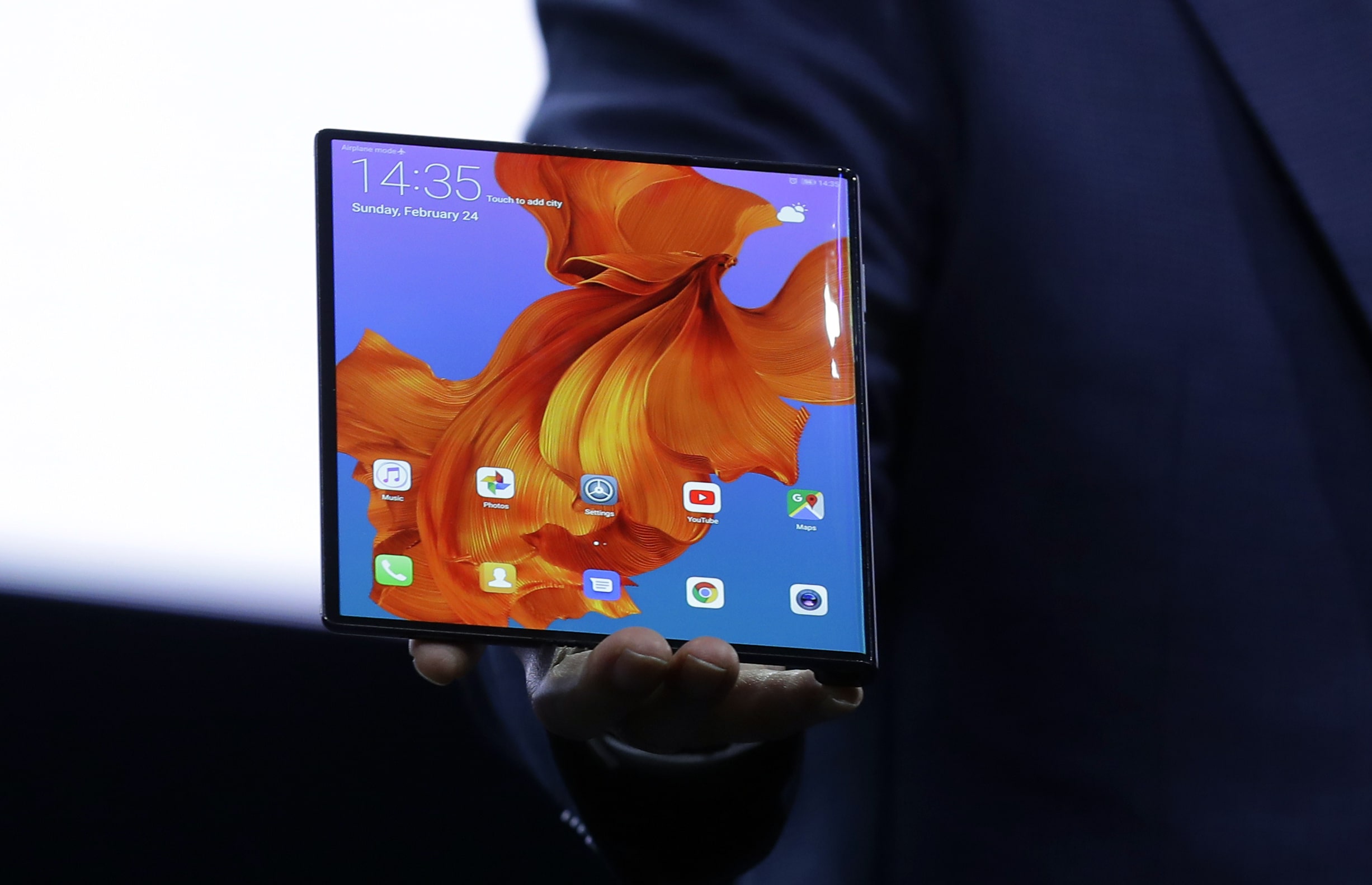
Just as the industry was getting comfortable with the standard “fold in half” dynamic, Huawei upended the table. The release of the Mate XT marked a significant milestone in mobile engineering. It is the first commercially available triple-folding smartphone, a device that effectively has two hinges and three distinct screen sections.
When fully collapsed, the Mate XT functions like a standard, albeit slightly thick, smartphone. But the magic lies in its unfurling. You can open it once to get a square-ish dual-screen experience, or open it fully to reveal a massive 10.2-inch display. This is no longer just a phone that turns into a small tablet; it is a phone that turns into a full-sized iPad alternative.
The timing of this release was strategic. Hitting the market immediately following Apple’s iPhone 16 announcement sent a clear message: while some companies refine, others reinvent. The Mate XT showcases advancements in ultra-thin glass and complex hinge durability that many thought were years away. It solves the issue of aspect ratio that plagued earlier foldables. By unfolding into a massive landscape widescreen, it is perfect for watching movies without the massive black bars that usually accompany square foldable screens.
However, the triple-fold design introduces its own set of anxieties. More hinges mean more points of mechanical failure. The screen is exposed on the outside in some configurations, raising concerns about scratches and drops. It is a bold, beautiful, and fragile piece of future tech.
Samsung’s Counterattack: The Rollable Display
While Huawei pushes the limits of folding, Samsung appears ready to change the mechanism entirely. Industry rumours and patent filings suggest that the South Korean tech giant is preparing to unleash a rollable display phone. This device wouldn’t fold like a book; it would expand like a scroll.The concept of a rollable phone addresses the two biggest complaints about foldables: the crease and the thickness.
How Rollable Tech Works
In a rollable device, the flexible OLED panel wraps around an internal roller mechanism on one side of the phone. In its compact state, the “extra” screen is tucked away inside the chassis. When the user triggers an expansion—likely through a button press or a gesture—motorised arms push the frame of the phone outward, and the screen unrolls to fill the new space.
The Advantage of Rolling
Because the screen bends in a gentle curve around an internal axis rather than folding sharply at a 180-degree angle, there is no permanent crease. The display remains perfectly flat and smooth when extended. Furthermore, because there is no need to stack two halves of a phone on top of each other, a rollable device can remain much thinner than a foldable one. It maintains the sleek profile of a standard flagship phone until you need the extra real estate.
Samsung has teased this technology at display shows for years, showing off prototypes that slide outwards to increase screen width by 50%. If they can bring this to mass market production, it could make the current crop of foldables look antiquated overnight.
The Engineering Challenges of a Shapeshifting Phone
Building a rollable phone is exponentially more difficult than building a foldable one. In a foldable, the internal components (battery, processor, cameras) can be split into two distinct halves, connected by ribbon cables across the hinge. In a rollable, the internal volume of the phone changes.
The Space Problem
Where do you put the battery? If the phone expands, you can’t have a solid battery blocking the path of the rolling screen or the motorised arms. This likely means smaller batteries or novel battery shapes, which could impact longevity—a critical factor for power users who want a large screen.
Durability and Dust
The sliding mechanism introduces a significant vulnerability: dust. If a single grain of sand gets caught in the tracks or, worse, gets rolled up inside the phone against the delicate OLED panel, it could destroy the display. Sealing a device with moving parts against water and dust (IP ratings) is a nightmare for engineers. Foldables have only recently achieved water resistance; rollables will have an even harder mountain to climb.
The Motor
Most rollable concepts rely on small motors to push the screen out smoothly. Mechanical motors are points of failure. If the motor jams, your phone is stuck in one position. Alternatively, a manual “pull” mechanism could be used, but that lacks the premium feel and precision control of a motorised expansion.
Is Apple Falling Behind?
In the midst of this experimental whirlwind, Apple’s strategy with the iPhone 16 stands in stark contrast. The Cupertino company has famously avoided the foldable craze, sticking to the refinement of the traditional slab form factor.
Critics argue that Apple is falling behind, ceding the mantle of “innovator” to Samsung and Chinese manufacturers. While Android users are flipping, folding, and rolling their devices, iPhone users are essentially using the same physical design they have had for years.
However, defenders of Apple’s strategy point to the maturity of the technology. Apple rarely enters a market first; they enter when they can do it best. The issues of creases, plastic screen durability, and software optimisation are still prevalent in the foldable world. It is likely that Apple is experimenting with these form factors in its labs, but refuses to release a product until the screen feels as durable as glass and the mechanism is invisible to the user.
The release of the iPhone 16 serves as a benchmark for stability. It reminds the market that while rollables and foldables are exciting, the vast majority of consumers still prioritise reliability, camera consistency, and battery life over experimental screen shapes.
Software: The Unsung Hero of the New Form Factors
Hardware is only half the battle. A triple-folding phone or a rollable device is useless if the software doesn’t adapt instantly to the changing canvas. Google has done significant work with Android to support “continuity,” ensuring that an app running on the small screen flows seamlessly to the large screen without crashing or resizing awkwardly.
For a rollable, this is even more complex. The screen doesn’t just switch from “State A” (small) to “State B” (large); it grows dynamically. The software interface needs to be responsive, redrawing the layout in real-time as the phone expands. Icons need to be spaced out, video players need to stretch, and text needs to reflow instantly.
Samsung’s One UI has been the gold standard for this so far, offering robust multi-window support. Huawei’s HarmonyOS has also shown impressive adaptability on the Mate XT, allowing for three-app multitasking that feels more like a desktop experience than a mobile one.
Conclusion: The Era of the Transformer
The race between Samsung and Huawei—and the looming shadow of Apple—is driving a golden age of hardware design. The concept of what a smartphone “is” has become fluid. We are moving away from the idea that we must carry multiple devices (a phone, a tablet, and a laptop) and toward a future where one device can shapeshift to meet the needs of the moment.
The Huawei Mate XT proves that we can push the boundaries of size and multitasking today. Samsung’s potential rollable proves that we can solve the aesthetic issues of the fold tomorrow. While these devices currently come with eye-watering price tags that relegate them to the status of luxury items for early adopters, the technology will eventually trickle down.
We are watching the death of the compromise. Soon, we won’t have to choose between a pocketable device and a cinematic screen. Through the magic of folding glass and rolling motors, we will have both.
