
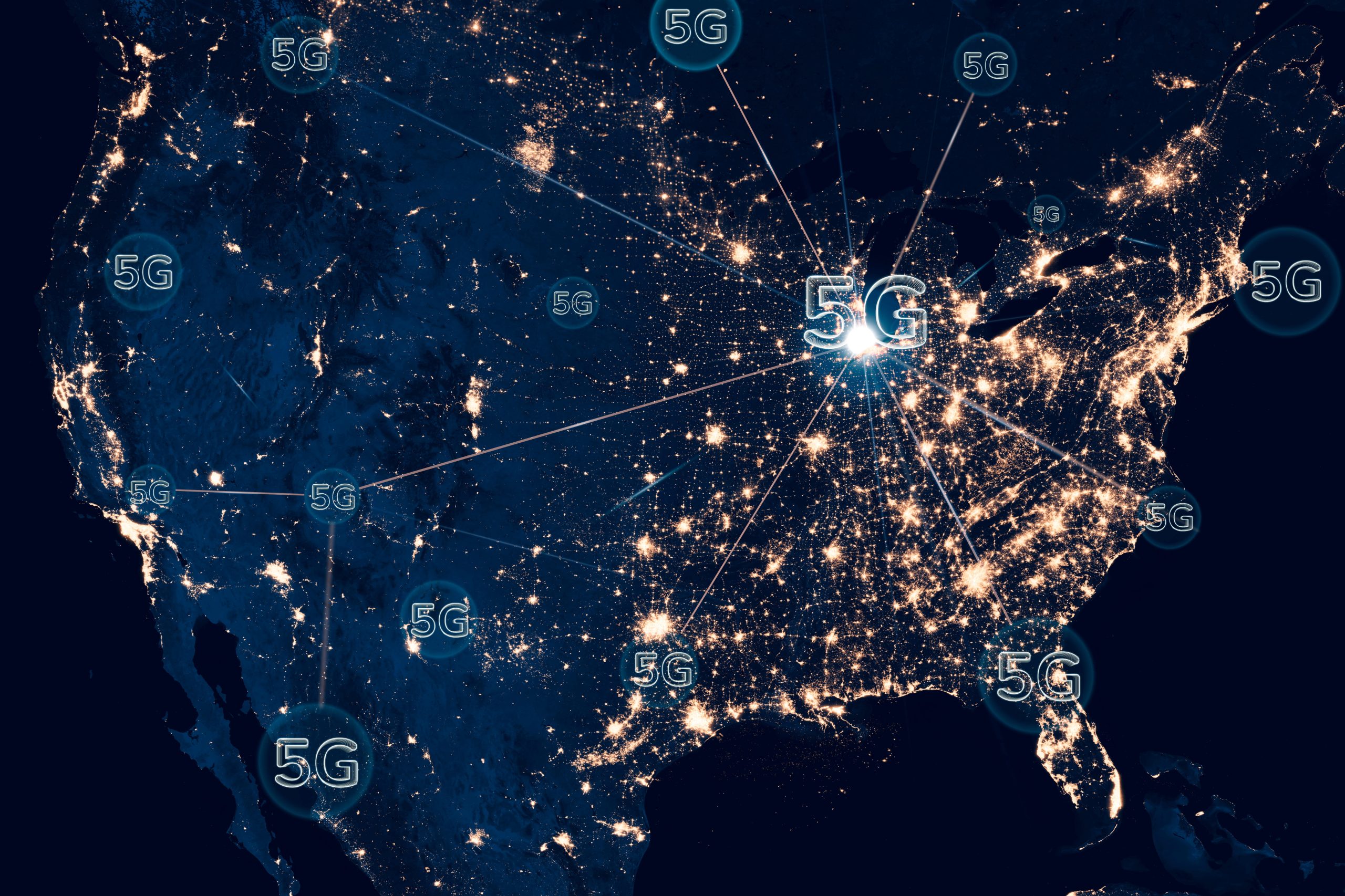
Imagine a world where everything is connected. Not just your phone or your laptop, but your car, your refrigerator, the streetlights outside, and even the sensors in a remote factory.
This isn’t science fiction; it is the reality being built right now through the deployment of 5G technology. As we stand on the brink of this technological revolution, it is essential to understand that 5G is not merely a faster version of 4 G.
It represents a fundamental shift in how we approach networking, designed to meet the explosive demand for data and the complex needs of a fully interconnected society.
The transition to fifth-generation wireless technology is driven by the need to support diverse and flexible applications, particularly within the Internet of Things (IoT). While previous generations focused primarily on connecting people, 5G focuses on connecting everything.
From smart cities to autonomous vehicles, the infrastructure required to support these innovations demands a network that is faster, more reliable, and capable of handling massive amounts of data simultaneously.
To achieve this, engineers and international standard bodies have developed a suite of key technologies that define 5G.
These range from advanced antenna systems to new methods of encoding data. By moving away from the rigid frameworks of the past and adopting a flexible new system design, 5G is poised to empower a future-ready global economy.
In this guide, we will explore the technical pillars that make this new era of connectivity possible, breaking down the complex engineering into clear, understandable concepts.
The Foundation of 5G Architecture
The core of 5G technology lies in its ability to adapt. Unlike its predecessors, which were largely one-size-fits-all solutions, 5G is built to be versatile. This versatility starts with the underlying transmission technologies.
How do OFDMA and MIMO power the network?
At the heart of the 5G air interface are two critical technologies: OFDMA (Orthogonal Frequency-Division Multiple Access) and MIMO (Multiple Input Multiple Output).
OFDMA is a multi-user version of the digital modulation scheme used in 4 G. It allows the network to serve multiple users simultaneously by splitting a single frequency channel into smaller sub-carriers.
Think of a highway that can dynamically change the number of lanes based on traffic. This efficiency is crucial for supporting the sheer volume of devices expected in the IoT ecosystem.
Building on this, 5G utilises advanced MIMO technology. While 4G networks also used MIMO, 5G takes it to a new level—often referred to as Massive MIMO. This involves deploying a large number of antennas at the base station to send and receive more data at the same time.
This large-scale antenna technology significantly increases the capacity of the network, allowing it to handle more users without a drop in speed. It ensures that even in crowded areas, the connection remains stable and fast.
Supporting diverse application scenarios
The international technical standards for 5G were designed with three specific goals in mind, often categorised as the “three major application scenarios.”
- Enhanced Mobile Broadband (eMBB): This is the speed boost consumers notice most. It supports high data rates for things like streaming 4K video and virtual reality.
- Massive Machine Type Communications (mMTC): This supports the “Internet of Things,” allowing billions of low-power devices (like smart meters or agricultural sensors) to connect to the network without overwhelming it.
- Ultra-Reliable Low Latency Communications (uRLLC): This is critical for mission-critical applications where failure is not an option, such as remote robotic surgery or autonomous driving.
By adopting a flexible system design based on OFDMA and MIMO, 5G can dynamically allocate resources to meet the conflicting needs of these three scenarios.
Spectrum and Frequency Innovations
One of the most significant differences between 4G and 5G is how they utilise the radio spectrum. Radio spectrum is the invisible highway that transports data, and 5G opens up new lanes that were previously inaccessible.
Why does 5G use different frequency bands?
4G LTE networks primarily operate on medium and low-frequency bands. While these bands are excellent for covering large distances, they have become congested. There is only so much space available on these frequencies, which limits how much data can be transmitted.
5G addresses this limitation by supporting both medium/low-frequency bands and high-frequency bands (often called millimetre waves). Recognising that resources in the lower bands are limited, 5G expands into the higher frequencies to unlock massive amounts of bandwidth.
The technical solution for 5G is unified, meaning it can operate across this wide range of spectrums seamlessly. It supports a basic bandwidth of 100 MHz, which is significantly wider than the standard 20 MHz channels used in 4 G. This wider pipe allows for much faster data flow, essential for the high-speed applications of the future.
Balancing coverage and capacity
The use of dual frequency ranges allows network operators to balance two competing needs: coverage and capacity.
- Medium and Low Frequencies: These are used to provide the “blanket” of coverage. Low-frequency waves travel farther and can penetrate walls better. This ensures that you still get a signal when you are inside a building or driving through a rural area. They are the backbone of the network’s reliability.
- High Frequencies: These are used to improve capacity in “hot spots.” High-frequency waves carry huge amounts of data but don’t travel very far and are easily blocked by obstacles.
Therefore, they are deployed in dense urban areas, stadiums, or shopping malls where thousands of people are trying to connect at once.
By intelligently switching between these bands, 5G ensures a consistent user experience regardless of location.
Advanced Coding and Transmission
Sending data across the airwaves requires sophisticated coding schemes to ensure that the information arrives intact. 5G introduces new methods that are more efficient than those used in previous generations.
What are LDPC and Polar codes?
In digital communications, channel coding is used to detect and correct errors that occur during transmission. 5G has adopted two new coding schemes to replace the Turbo codes used in 4 G.
- LDPC (Low-Density Parity-Check): 5G uses LDPC codes for data channels. These codes are incredibly efficient at handling large blocks of data at high speeds. They allow the network to push data through the “pipe” faster and with less energy consumption, which is vital for high-rate transmission.
- Polar Codes: For control channels (the signals that tell the phone and the tower how to talk to each other), 5G uses Polar codes. This is a breakthrough technology that has been proven to achieve the theoretical limit of channel capacity. It ensures that the critical instructions needed to run the network are delivered with extreme reliability.
Together, these coding schemes support the high data rates and broad coverage requirements of modern networking.
Large-scale antenna technology
We mentioned MIMO earlier, but it is worth revisiting the hardware aspect. To support better coverage and high-rate transmission, 5G towers are equipped with arrays of antennas that can form focused beams of signal.
Instead of broadcasting a signal in all directions like a traditional lightbulb, 5G antennas can act like a spotlight, directing the signal specifically to where the user is. This technique, known as beamforming, extends the range of the high-frequency signals and improves the connection quality for users at the edge of the cell.
Achieving Speed and Reliability
For many of the futuristic applications promised by 5G, speed isn’t just about how fast you can download a movie. It is about “latency”—the time it takes for a signal to travel from the source to the destination and back.
How does 5G reduce latency?
Low latency is the key to real-time interaction. To achieve this, 5G adopts a “short frame” structure. In network terms, data is sent in packets or frames. By shortening the length of these frames, the network can send and receive data much more frequently.
Imagine a conversation where you have to wait 10 seconds before you can reply. That is high latency. Now imagine a conversation where you can reply instantly. That is low latency. 5G’s short frame structure allows for that instant reply, which is essential for things like controlling a drone or playing competitive online games.
Ensuring high reliability
Along with speed, the network must be reliable. 5G employs “fast feedback” mechanisms. If a packet of data is lost or corrupted during transmission, the network realises it almost immediately and asks for it to be sent again.
Furthermore, 5G uses multi-layer and multi-station data retransmission technologies. This means that if one tower fails to get the message through, another nearby tower can step in to help, or the data can be sent via a different path. This redundancy ensures that the connection remains robust even in challenging environments.
Frequently Asked Questions
What is the main difference between 4G and 5G?
While 4G focused on mobile broadband for smartphones, 5G is designed to connect everything. It offers significantly higher speeds, lower latency, and the ability to connect many more devices simultaneously through advanced spectrum usage and coding technologies.
Why is 5G important for the Internet of Things (IoT)?
Current networks would struggle to support the billions of devices expected to come online in the next few years. 5G’s ability to handle “Massive Machine Type Communications” (mMTC) means it can support high densities of sensors and smart devices without congestion.
Is 5G just about faster download speeds?
No. While faster speeds (eMBB) are a big part of it, the revolution is really in the low-latency (uRLLC) and reliability. This enables new technologies like autonomous driving, remote healthcare, and smart manufacturing that were not possible with 4 G.
How does 5G handle obstacles like buildings?
5G uses a mix of frequencies. While buildings can block high-frequency signals, 5G also utilises medium and low frequencies, which are excellent at penetrating walls and obstacles, ensuring consistent coverage.
Empowering a Connected Future
The rollout of 5G is not just an upgrade; it is a transformation of our digital infrastructure. By integrating technologies like OFDMA, Massive MIMO, and advanced Polar/LDPC coding, 5G creates a network that is both powerful and flexible.
It intelligently utilises spectrum resources—balancing the coverage of low frequencies with the massive capacity of high frequencies—to meet the diverse needs of our modern world.
From the high-speed demands of virtual reality to the critical reliability required for autonomous vehicles, 5G is the foundation upon which the next generation of innovation will be built. As these international standards continue to be deployed globally, we can look forward to a future where connectivity is seamless, instantaneous, and accessible to all.
