
We often tell our children to reach for the stars. It is a metaphor for ambition, for dreaming big, and for refusing to accept limits. But for a new generation of scientists, engineers, and global communicators, reaching for the stars is not just a metaphor—it is a daily operational reality.
When we stream a documentary, check a map while hiking in the mountains, or make an international call, we rarely stop to think about the incredible journey that data takes. It feels instantaneous. Yet, in many cases, that signal has travelled thousands of miles into space and back in the blink of an eye.
Satellite communication is the invisible backbone of our modern world. For students interested in STEM (Science, Technology, Engineering, and Mathematics), this field represents one of the most exciting frontiers of innovation. It combines physics, computer science, and social impact in a way few other industries do.
Understanding how this technology works is essential for the future-ready student. It helps them grasp how our global village stays connected and opens their eyes to career paths they may have never considered. Let’s explore the mechanics of satellite communication, the rise of space internet, and why these orbiting giants are crucial for a holistic, connected future.
What is satellite communication?
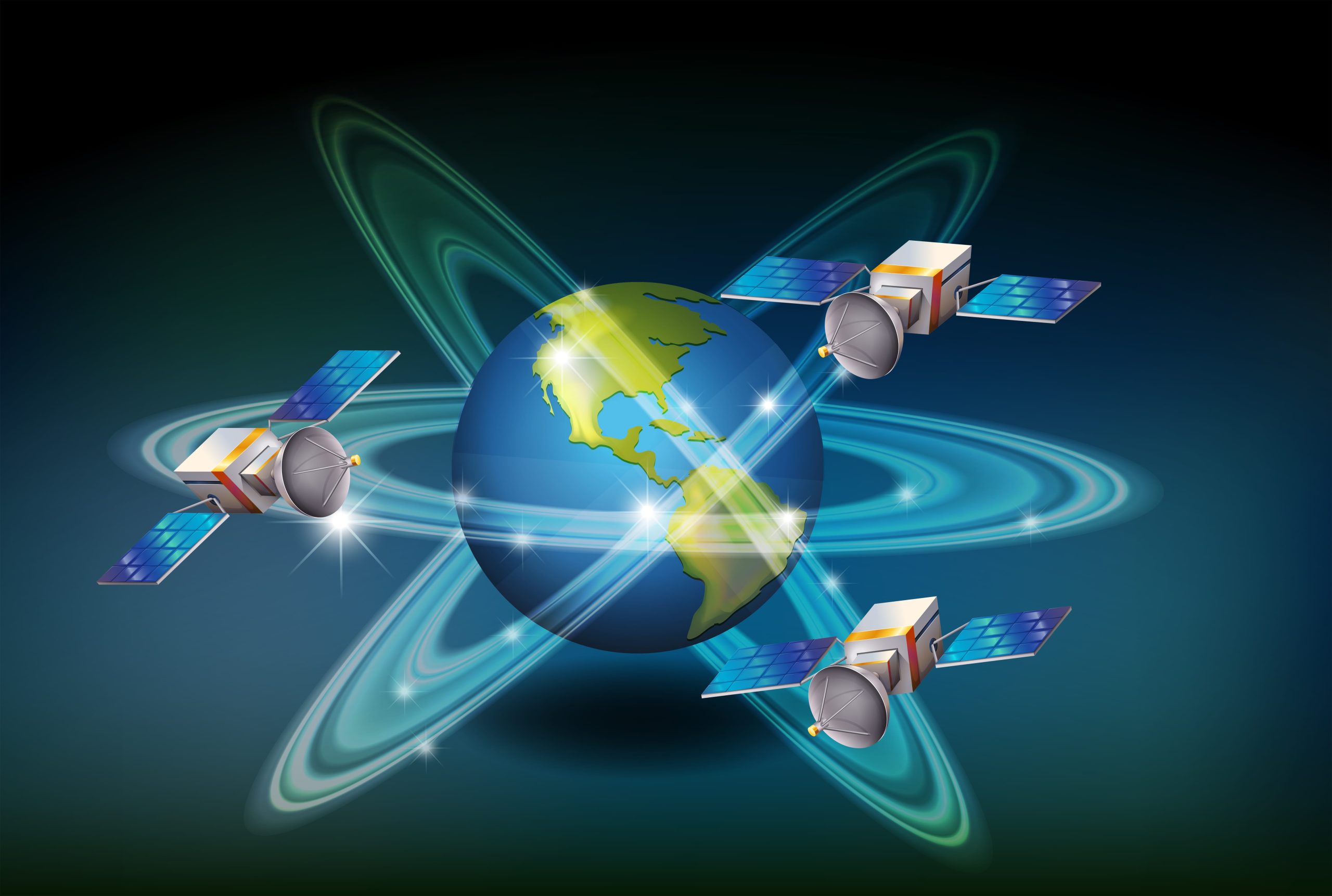
At its simplest, a satellite is a relay station in the sky. Think of it as a giant mirror positioned high above the Earth. When a ground station on Earth sends a signal up (this is called the “uplink”), the satellite captures it, amplifies it, and bounces it back down to a different location on Earth (the “downlink”).
This process overcomes a fundamental problem of physics: the curvature of the Earth. Radio waves travel in straight lines. If you try to send a signal from New York to London directly across the surface, the Earth’s curve blocks it. By placing a relay station high in the sky, you create a direct line of sight between two points that are thousands of miles apart on the ground.
These satellites carry transponders—devices that receive signals at one frequency and retransmit them at another to avoid interference. This technology powers everything from your GPS navigation and television broadcasts to secure military communications and, increasingly, high-speed internet.
The geography of space: Understanding orbits
Not all satellites are created equal, and where they hang out in space dictates what they can do. For a student fascinated by physics, understanding orbits is key to understanding how the space internet works.
Geostationary Earth Orbit (GEO)
For decades, most communication satellites sat in Geostationary Earth Orbit. This is a specific ring around the equator, roughly 22,236 miles (35,786 km) above the Earth.
At this specific altitude, the satellite orbits at the same speed that the Earth rotates. To an observer on the ground, the satellite appears to hang motionless in the sky. This is great for satellite TV because you can point a dish at one spot on the roof and never have to move it.
However, the distance is a challenge for internet usage. The signal takes about a quarter of a second to travel up and back. This “latency” causes the lag you might notice on a Zoom call or when playing an online video game.
Low Earth Orbit (LEO)
This is where the new revolution in space internet is happening. LEO satellites orbit much closer to us, typically between 100 and 1,200 miles (160 to 2,000 km) above the surface.
Because they are so close, the signal travel time is negligible, making the internet feel as snappy as a fibre optic cable connection. However, because they are close, they orbit extremely fast—circling the planet every 90 minutes. A single satellite is only visible to a ground user for a few minutes before it vanishes over the horizon.
To fix this, companies launch “constellations” of hundreds or thousands of satellites. As one moves out of range, another moves in to take the baton, creating a seamless web of coverage.
Medium Earth Orbit (MEO)
Sitting between GEO and LEO, this orbit is commonly used for GPS navigation satellites. It offers a balance between coverage area and latency.
How space internet bridges the digital divide
One of the core values we teach in holistic education is the importance of equity and community. We want our students to understand that not everyone enjoys the same privileges. Access to information is one of the great dividers of the 21st century.
While cities enjoy high-speed fibre connections, vast portions of the planet remain offline. Laying physical cables across the Sahara Desert, through the Amazon rainforest, or deep into the Himalayas is often too expensive or logistically impossible. This leaves rural communities, island nations, and remote researchers cut off from the global economy and educational resources.
Connecting the unconnected
Satellite internet is the great equaliser. It does not care about mountain ranges or oceans. As long as you have a clear view of the sky and a power source, you can connect.
These satellites connect different parts of the world, allowing for communication across deserts, oceans, and other empty areas. They act as a bridge, bringing telemedicine to remote villages, online education to isolated schools, and market access to farmers in developing nations.
For the socially conscious student, the satellite industry offers a way to use technology for humanitarian purposes. It is not just about faster downloads; it is about bringing the library of human knowledge to every corner of the globe.
The vital role of satellites in disaster recovery
Resilience is a trait we strive to instil in every child. We teach them to bounce back when things go wrong. On a global scale, satellites provide that resilience for our communication infrastructure.
When a hurricane, earthquake, or tsunami strikes, terrestrial infrastructure is often the first casualty. Cell towers lose power, fibre cables are severed, and roads become impassable. In these critical moments, first responders lose the ability to coordinate rescue efforts.
Satellite phones and internet terminals are immune to these ground-level disruptions. They are often the only way for disaster relief teams to communicate, organise logistics, and save lives in the immediate aftermath of a catastrophe. Communications satellites relay vital information for government agencies and NGOs, ensuring that help arrives where it is needed most.
Why “Future-Ready” means understanding space tech
Parents often ask how they can prepare their children for a future that is changing so rapidly. The answer lies in exposure to industries that will define the next 50 years. The space economy is projected to grow into a trillion-dollar industry, and satellite communication is its most lucrative sector.
Understanding this technology opens doors to diverse career paths:
- Aerospace Engineering: Designing the rockets and satellites that make orbit possible.
- Astrophysics: Calculating the complex orbital mechanics required to keep constellations from crashing into each other.
- Network Architecture: Building the software that routes data seamlessly between space and ground stations.
- Space Law and Policy: As orbit gets crowded, we need leaders who can negotiate international treaties on space traffic management and debris mitigation.
- Environmental Science: Using satellite data to monitor climate change, deforestation, and ocean health.
A student who grasps the fundamentals of satellite technology today is positioning themselves for leadership roles tomorrow. It is a perfect example of how academic discipline in math and science translates into real-world impact.
The challenge of space debris
A holistic education also encourages critical thinking about the consequences of our actions. While satellite constellations offer immense benefits, they also bring challenges. The most pressing issue is space debris.
With thousands of new satellites launching, low Earth orbit is becoming crowded. Collisions, though rare, can generate clouds of debris that threaten other spacecraft and even astronauts aboard the International Space Station.
This presents a new problem for the next generation of engineers to solve: How do we keep space sustainable?
Students entering this field will be tasked with designing satellites that can de-orbit themselves at the end of their lives or developing “trash collector” spacecraft to clean up orbit. It is a complex problem requiring creativity, responsibility, and technical prowess—exactly the skills a robust education aims to cultivate.
How to nurture an interest in space technology
If your child shows an interest in how their phone works, or looks up at the night sky with wonder, there are practical ways to nurture that curiosity outside the classroom.
Track satellites together
Numerous free apps allow you to track the International Space Station or Starlink trains as they pass overhead. Watching a man-made object glide silently across the stars is a powerful visual lesson in physics.
Discuss the news
When a rocket launch makes the news, talk about it. Discuss why they are launching. Is it for exploration? For the internet? For weather monitoring? Making these connections helps children see science as a living, breathing part of their world.
Encourage hands-on learning
Robotics kits and coding programs are excellent gateways. Understanding the logic of code is the first step toward understanding how data is packaged and sent through the vacuum of space.
Preparing for a connected future
The world is becoming smaller, faster, and more interconnected. The invisible threads of data weaving through our atmosphere are binding us together in ways previous generations could only imagine.
Communications satellites relay vital information for television, the internet, and telephony, making distant communication possible. Without them, maintaining global communication networks would be hard, especially in remote or rural areas where laying cables is not possible.
For the students of today—the dreamers, the builders, the future leaders—understanding this technology is about more than just knowing how the internet works. It is about understanding the infrastructure of the future. By fostering a curiosity about these complex systems, we empower our children to not just be consumers of technology, but to be the architects of a better, more connected world.
Whether they end up designing the next generation of spacecraft or simply using these tools to run a global business, the lessons learned from the stars—precision, resilience, and global perspective—will serve them for a lifetime.
