
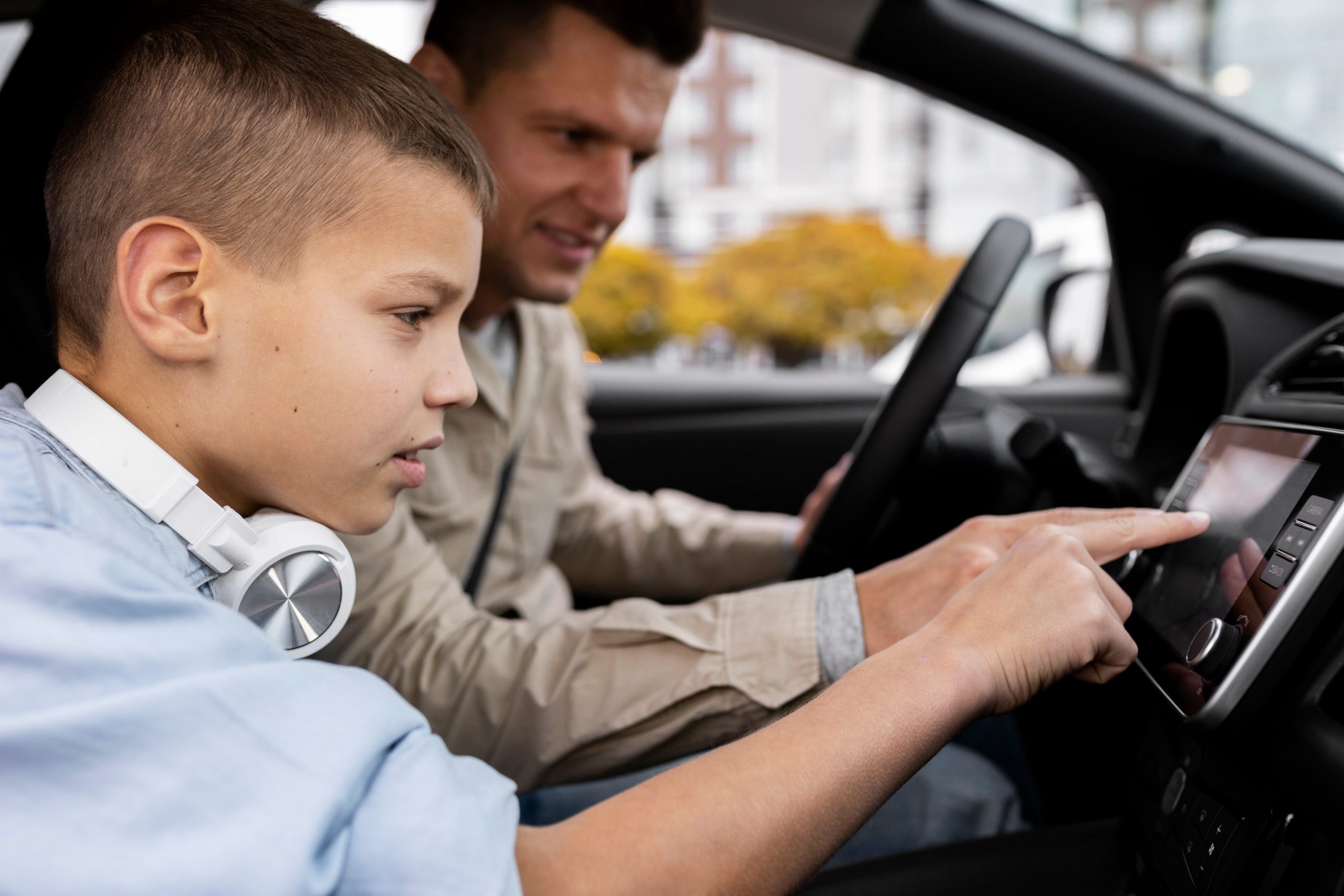
Every parent knows the feeling. It starts with a learner’s permit and ends with sleepless nights waiting to hear the garage door open. Handing over the car keys to your teenager is one of the most terrifying rites of passage in modern parenting. You trust your child, but you don’t necessarily trust the road, the other drivers, or the momentary distractions that can lead to disaster.
For generations, the solution to this anxiety was simply “more practice” or “stricter rules.” But we are standing on the precipice of a shift that will fundamentally change how our children travel.
The automotive industry is undergoing its most significant transformation since the invention of the assembly line. The rise of Electric Vehicles (EVs) and, more importantly, self-driving technology, promises to rewrite the safety statistics that keep parents awake at night.
This isn’t just about cool gadgets or saving money on gas. It is about a “future-ready” world where the primary cause of traffic accidents—human error—is systematically eliminated. For parents concerned about the long-term well-being and safety of their children, understanding this technology is essential.
The Human Error Problem
To understand why autonomous technology is so vital, we have to look at why crashes happen in the first place. The statistics are sobering. According to the National Highway Traffic Safety Administration, nearly 94% of serious crashes are due to human error.
When teenagers are behind the wheel, the risks multiply. Inexperience combined with common human flaws creates a dangerous mix. The three main culprits are distraction, fatigue, and impairment.
Distraction
In an era of constant connectivity, distraction is the new epidemic. A momentary glance at a text message or a playlist change takes a driver’s eyes off the road for seconds that can be fatal. Teenagers, whose brains are still developing impulse control, are particularly susceptible to this.
Fatigue
School, extracurriculars, social lives, and sports—our children are busier than ever. Drowsy driving is often compared to drunk driving in terms of how it slows reaction times. A tired student driving home from a late practice is a risk that technology can mitigate.
Impairment and Emotion
While we educate our children about the dangers of driving under the influence, we often overlook emotional impairment. Anger, sadness, or intense stress can cloud judgment just as effectively as a substance.
This is where the promise of self-driving cars—Autonomous Vehicles (AVs)—shines brightest. A computer does not get tired. It does not get angry at the driver who cuts it off. It does not check a text message. It simply drives, constantly scanning the environment with a precision no human can match.
How Do Self-Driving Cars Actually Work?
It might seem like science fiction, but the technology is already here, rapidly evolving from “driver assistance” to full autonomy. Understanding how these vehicles “see” the world helps alleviate the fear of giving up control.
LiDAR and Radar
Most autonomous systems rely on LiDAR (Light Detection and Ranging). This technology uses laser pulses to create a 3D map of the car’s surroundings. It can “see” a pedestrian stepping off a curb in pitch darkness or detect a sudden stop in traffic hundreds of yards ahead—situations where a human driver might react too late. Radar works alongside LiDAR to monitor the speed and distance of other objects, ensuring the car maintains a safe buffer zone at all times.
Artificial Intelligence and Machine Learning
The “brain” of the car is a sophisticated AI. It processes data from cameras and sensors in real-time. But more importantly, it learns. These systems are trained on millions of miles of driving data. They learn to predict behaviors, such as identifying that a ball rolling into the street likely means a child is chasing it. This capability allows the vehicle to react proactively rather than just reactively.
V2X Communication
Vehicle-to-Everything (V2X) communication is the next frontier. This allows cars to “talk” to each other and to infrastructure. Imagine your child’s car knowing that a traffic light is about to turn red before it’s even visible, or receiving a warning from a car three miles ahead that there is black ice on the bridge. This interconnected web of data creates a safety net that human reflexes cannot replicate.
The Levels of Autonomy
We aren’t going to jump from standard sedans to robot taxis overnight. The industry uses a 6-level scale to classify how much control the car has.
Level 0-2: Driver Assistance
Most modern cars are here. Features like Lane Keep Assist, Adaptive Cruise Control, and Automatic Emergency Braking fall into this category. The human is still fully responsible, but the car helps out.
Level 3: Conditional Automation
This is the big leap. In specific conditions (like a traffic jam on a highway), the car can drive itself, and the driver can take their eyes off the road. However, the driver must be ready to take over if the car asks.
Level 4: High Automation
The car can handle almost all driving tasks without human intervention in specific areas (geofenced locations). If something goes wrong, the car can pull over safely on its own.
Level 5: Full Automation
The steering wheel is optional. The car can drive anywhere a human can, in any weather condition. This is the ultimate goal for ensuring total passenger safety.
The Electric Revolution: A Cleaner Future
While safety is the immediate concern, the shift toward Electric Vehicles (EVs) addresses the kind of world our children will inherit. The environmental benefits are clear, but there are practical, holistic advantages for families as well.
Sustainability and Health
Gas-powered vehicles are a major contributor to air pollution, which has direct links to respiratory issues in children. A shift to EVs means cleaner air in our cities and around our schools. For an increasingly eco-conscious generation, driving an EV aligns with their values of stewardship and sustainability.
Lower Maintenance and Reliability
For parents sending a child off to college or boarding school, vehicle reliability is a major concern. EVs have far fewer moving parts than internal combustion engines. There are no oil changes, no spark plugs to misfire, and no transmission gears to grind. This translates to fewer breakdowns on the side of the highway and lower long-term costs for young adults starting their careers.
Preparing Students for a High-Tech Landscape
The automotive revolution isn’t just about the cars we drive; it’s about the careers our children will build. As we move toward a world dominated by AI and green energy, the job market is shifting.
New Career Pathways
The maintenance of a diesel engine requires a mechanic. The maintenance of an autonomous EV requires a software engineer, a data analyst, and an electrical technician.
By encouraging interest in STEM (Science, Technology, Engineering, and Mathematics) fields now, we prepare students for the high-demand roles of the future. The automotive industry will need bright minds to design safer algorithms, improve battery efficiency, and manage smart city infrastructure.
Ethical Considerations
This technology also opens up fascinating debates in ethics and law. If an accident is unavoidable, how does the AI decide what to do? Future leaders—perhaps your children—will be the ones answering these questions, blending philosophy with technology.
What Parents Can Do Right Now
We may be a few years away from affordable Level 5 autonomous cars sitting in every driveway, but you don’t have to wait to prioritize safety.
Look for ADAS Feature
When shopping for a first car for your teen, prioritize Advanced Driver Assistance Systems (ADAS). Don’t worry about leather seats or premium sound systems. Look for:
- Automatic Emergency Braking (AEB): Stops the car if the driver doesn’t react to an obstacle.
- Blind Spot Detection: An extra set of eyes for changing lanes.
- Lane Departure Warning: Alerts the driver if they drift—a key indicator of drowsiness or distraction.
Encourage Tech Literacy
Don’t let the technology be a mystery. Encourage your children to understand how these systems work.
When they understand the limitations of current tech (like how heavy rain affects sensors), they become better, more attentive drivers.
Foster a “Safety First” Mindset
Technology is a tool, not a crutch. Even with the best safety features, the discipline and maturity of the driver remain paramount until full autonomy is achieved.
The Road Ahead
The transition to autonomous and electric vehicles represents hope. It is a hope for a world where traffic fatalities are a rarity rather than a daily statistic. It is a hope for a cleaner environment and a robust economy fueled by innovation.
For parents, it offers a glimpse of a future where the fear of the “new driver” phase is replaced by confidence. By embracing these advancements and preparing our children to live and work alongside them, we aren’t just giving them a ride—we are giving them a safer, smarter journey through life.
