
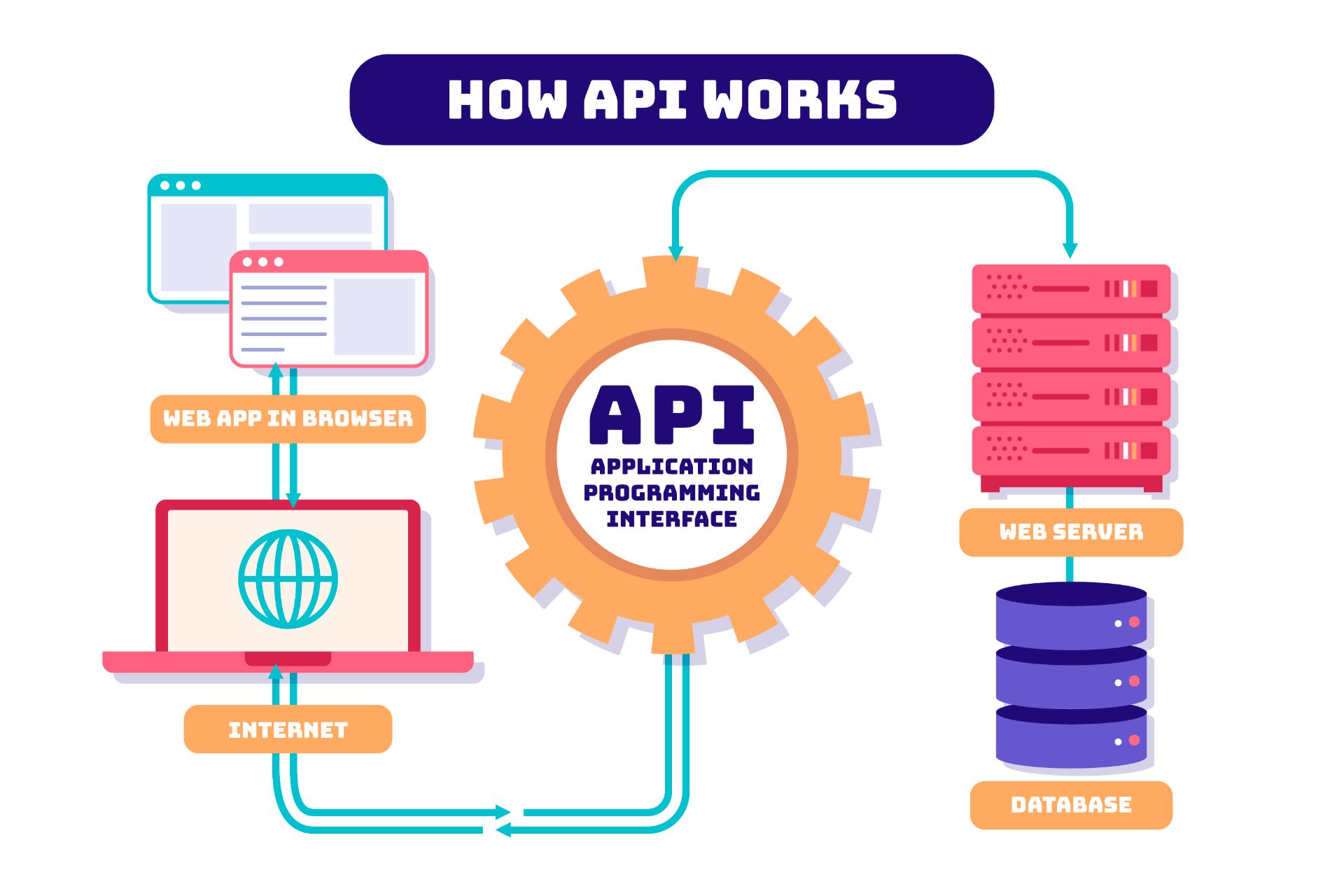
Application Programming Interfaces (APIs) act as the invisible couriers of the internet. Every time you refresh a social media feed, check the weather on your phone, or book a flight, an REST is working behind the scenes to exchange data between software components. They are the fundamental building blocks that allow modern applications to communicate.
For years, one architectural style dominated this landscape: REST. It became the default standard for building web APIs, praised for its simplicity and adherence to web standards. But as mobile usage surged and applications became more complex, developers began facing limitations with the traditional REST approach. Enter GraphQL, a newer alternative developed by Facebook designed to solve specific inefficiencies in data loading.
The debate between REST and GraphQL is common in engineering teams today. Both have distinct strengths, and the choice isn’t always obvious. This guide explores the core principles of both architectures, compares their functionality, and helps you decide which approach aligns best with your next project.
What is REST?
REST, or Representational State Transfer, is an architectural style for providing standards between computer systems on the web, making it easier for systems to communicate with each other. It wasn’t “invented” as a new technology, but rather defined in a 2000 dissertation by Roy Fielding as a set of constraints for creating scalable web services.
Key Characteristics of REST
At its core, REST relies on resources. A resource is any piece of information—like a user, a product, or a blog post—that can be named and identified. RESTful APIs use standard HTTP methods to interact with these resources:
- GET: Retrieve a resource
- POST: Create a new resource
- PUT/PATCH: Update an existing resource
- DELETE: Remove a resource
A defining feature of REST is statelessness. This means the server does not store any state about the client session on the server side. Each request from the client to the server must contain all of the information necessary to understand the request. This improves reliability and scalability, as the server doesn’t need to retain session memory across requests.
Another critical aspect is cacheability. Because REST uses standard HTTP, it can leverage HTTP caching mechanisms. If a client requests a resource that hasn’t changed, the browser or a proxy can return a cached version, significantly reducing server load.
A REST API Example
In a REST architecture, you typically have different endpoints for different resources. To fetch a user with the ID of 123, you might send a GET request to:
GET /api/users/123
The response would likely look like a standard JSON object containing all the data the server has defined for that user resource:
{
“id”: “123”,
“name”: “Jane Doe”,
“email”: “jane@example.com”,
“address”: “123 Main St”,
“friends”: [456, 789]
}
Notice that the server dictates the structure. Even if you only needed the user’s name, you receive the email, address, and friends list as well.
What is GraphQL?
GraphQL is a query language for APIs and a runtime for fulfilling those queries with your existing data. It was developed internally by Facebook in 2012 before being open-sourced in 2015. Facebook built GraphQL to handle the complex data requirements of its mobile applications, which were struggling with the rigid nature of REST.
Key Characteristics of GraphQL
Unlike REST, which is built around resources and HTTP verbs, GraphQL is built around schemas, queries, and mutations.
- Schema: A strongly typed definition of all the data types and relationships in your API. It serves as a contract between the client and the server.
- Query: The specific request sent by the client to fetch data.
- Mutation: A request used to modify data (similar to POST, PUT, DELETE in REST).
The most significant problem GraphQL solves is over-fetching and under-fetching.
- Over-fetching: Downloading more data than you need (like getting a user’s address when you only wanted their name).
- Under-fetching: Not getting enough data in a single request, forcing you to make multiple calls to different endpoints to assemble the view.
A GraphQL Example
GraphQL typically exposes a single endpoint (often /graphql). To get data, you send a query describing exactly what you want. If you only need the name of user 123, your request looks like this:
query {
user(id: “123”) {
name
}
}
The response is predictable and mirrors the query exactly:
{
“data”: {
“user”: {
“name”: “Jane Doe”
}
}
}
If you later decide you also need the email address, you can adjust the query on the client side. No changes are required on the server.
REST vs. GraphQL: Key Differences
While both architectures ultimately transmit data over HTTP, the mechanics of how they do so differ significantly.
Data Fetching
In REST, data is distributed across multiple endpoints (/users, /posts, /comments). If you want to load a user profile that includes their latest posts and the comments on those posts, you might have to hit three different endpoints. This “chattiness” can slow down mobile applications on poor networks.
GraphQL handles this with a single request to a single endpoint. You can ask for the user, their posts, and the comments all in one nested query. The server processes this and returns a single JSON package.
Data Structure flexibility
REST APIs return a fixed data structure defined by the backend developers. If the frontend team needs a new field, the backend team must update the endpoint or create a new one. This creates a dependency loop that can slow down development.
GraphQL shifts control to the client. The backend team defines the available data (the schema), but the frontend team decides what data to retrieve. This decoupling allows frontend and backend teams to work more independently.
Versioning vs. Evolution
APIs inevitably change. In REST, significant changes are usually handled by versioning the API (e.g., v1/users, v2/users). This ensures legacy clients don’t break, but leads to code bloat as developers must maintain multiple versions of the same endpoint.
GraphQL avoids versioning through schema evolution. You can add new fields to the schema without affecting existing queries. Old fields can be marked as deprecated, but left functioning until all clients have updated their queries.
Performance and Caching
This is where REST often holds the advantage. Because REST uses distinct URL endpoints, it can leverage native HTTP caching standards. Browsers and Content Delivery Networks (CDNs) understand how to cache a GET request to /api/products/10.
GraphQL uses a single endpoint (usually via POST), which effectively breaks standard HTTP caching. To achieve caching in GraphQL, developers often need to implement complex client-side caching strategies (using libraries like Apollo Client) or server-side complexity to handle unique query hashes.
Error Handling
REST uses standard HTTP status codes to indicate success or failure. A 404 means not found; a 500 means a server error; a 200 means success. This makes it easy for monitoring tools to track API health.
GraphQL typically returns a 200 OK status code for every request, even if the query contained errors. The actual error details are included in the JSON response body. This requires clients to parse the response body to determine if the operation was actually successful, which breaks standard monitoring conventions.
When to Use REST
Despite the hype around GraphQL, REST remains a robust and valid choice for many applications.
- Simple Applications: If your data models are straightforward and you don’t have complex relationships between resources, REST is easier to set up and maintain.
- Caching is Critical: If your application relies heavily on caching to manage high traffic (like a news site or a public catalogue), REST’s compatibility with HTTP caching is a massive benefit.
- Public APIs: If you are building an API for third-party developers, REST is the universal Language. Everyone knows how to use curl to hit a REST endpoint. The tooling and understanding are ubiquitous.
- Microservices: REST fits naturally into microservices architectures where different services communicate via HTTP.
When to Use GraphQL
GraphQL shines in scenarios where flexibility and efficiency are paramount.
- Complex, Nested Data: If your UI requires loading a user, their friends, their photos, and the comments on those photos, GraphQL will save you multiple network round-trips.
- Mobile Apps: Bandwidth is precious on mobile devices. GraphQL minimises the payload size by ensuring you only download exactly what is needed for the screen.
- Rapidly Evolving Frontends: If your product is in a stage of rapid iteration where UI requirements change daily, GraphQL allows frontend developers to change data requirements without waiting for backend updates.
- Aggregating Multiple Sources: GraphQL can act as a gateway, stitching together data from legacy REST APIs, databases, and third-party services into a single, cohesive schema for the client.
Building the Right Foundation
Choosing between REST and GraphQL is not about picking the “better” technology, but rather the one that solves your specific constraints. REST offers simplicity, cacheability, and broad compatibility. GraphQL offers flexibility, efficiency, and a superior developer experience for complex data requirements.
Before writing a single line of code, look at your data models and your UI designs. If your application looks like a complex web of interconnected data, the graph structure of GraphQL might be your best bet. If your application looks like a collection of independent resources, REST will likely serve you well.
