
Every parent knows the feeling—that slight flutter of anxiety when your child is out of reach. Whether they are on a school trip to the mountains or just navigating the urban jungle between home and campus, staying connected feels essential. We live in an era where “dead zones” are becoming less of a nuisance and more of a relic of the past.
Enter satellite connectivity in smartphones. This isn’t just technology for spies or astronauts anymore; it’s rapidly becoming a standard feature in the devices our children use every day. As we prepare the next generation for a future-ready world—one where they might become the engineers, leaders, and innovators of tomorrow—understanding the tools they will use is crucial.
Just as boarding schools provide a structured environment for holistic growth, the tech world is building a structured network above our heads to ensure safety and connectivity no matter where life takes our students. This technology is stabilising, speeds are increasing, and the costs are coming down. It mirrors the educational journey itself: a progression from basic foundations to advanced capabilities. Let’s explore how this technology works, why it matters for your family, and where it’s heading.
The Basics: How Your Phone Talks to Space
To understand where we are going, we need to understand the “how.” Traditionally, mobile phones rely on terrestrial networks—cell towers grounded on Earth. When you make a call or send a text, your phone sends a radio wave to the nearest tower. If you are too far from a tower, or if a mountain blocks the signal, you enter a dead zone.
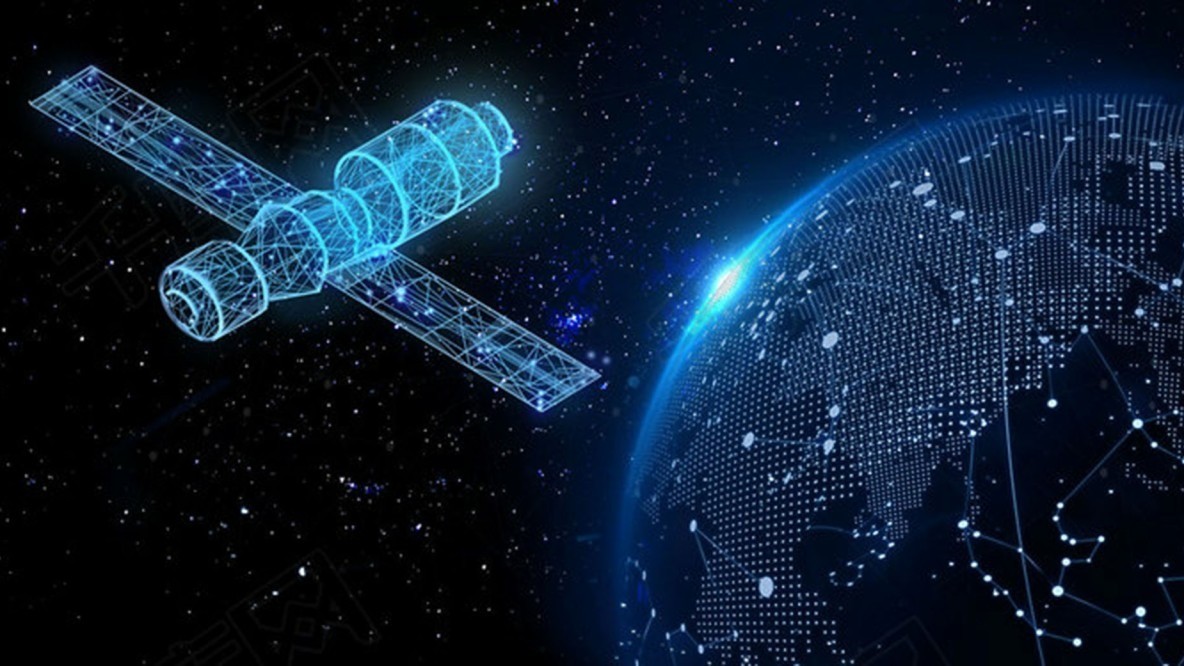
Satellite connectivity flips this script. Instead of looking for a tower on a hill, your phone looks up. It communicates directly with satellites orbiting hundreds of miles above the Earth.
Low Earth Orbit (LEO) Satellites
The game-changer in recent years has been the deployment of Low Earth Orbit (LEO) satellites. Unlike older communication satellites that sit high up in a geostationary orbit (moving with the Earth), LEO satellites zip around the planet much closer to the surface.
- Proximity: Because they are closer, the signal travel time (latency) is much shorter.
- Speed: This allows for faster data transmission, making it feasible for consumer devices.
- Network: Companies are launching “constellations” of thousands of these small satellites to blanket the globe in coverage.
For a student interested in STEM (Science, Technology, Engineering, and Mathematics), this is a fascinating real-world application of physics and engineering. It represents the kind of innovative thinking we encourage in a holistic learning environment—solving old problems (coverage gaps) with bold new solutions.
The Evolution of Connectivity: A Lesson in History
Just as a student progresses from middle school to high school, gaining more complex skills along the way, cellular technology has graduated through several generations. Understanding this history helps us appreciate the leap that satellite integration represents.
1G to 4G: The Terrestrial Era
- 1G (The Brick Phones): Analog voice only. It was revolutionary but static and scratchy.
- 2G (Digital Voice and Text): The birth of SMS. Suddenly, we could send short messages.
- 3G ( The Mobile Internet): We could browse the web, albeit slowly.
- 4G (Broadband Speeds): Streaming video, apps, and the smartphone economy we know today.
5G: The Current Standard
We are currently living in the 5G era. This generation brought massive speed upgrades and lower latency. It enabled things like remote surgery and autonomous vehicles. However, 5G is still largely dependent on ground infrastructure. If a storm knocks out a tower, or if you are in a remote boarding school location deep in nature, 5G might not reach you.
The Satellite Integration
This is where we are today. Phone manufacturers are beginning to put satellite antennas directly into standard smartphones. Initially, this was for emergencies only—sending a distress signal when no cell service was available. But as the technology stabilises, we are moving beyond just SOS messages. We are entering an era of true hybrid connectivity.
Stabilising the Tech: Better, Faster, Cheaper
The provided context for this article highlights a crucial trend: As the technology stabilises, we are only going to see improvements in terms of transmitting higher speeds as well as optimising per GB data costs.
Increasing Transmission Speeds
Early implementations of satellite features in phones (like the iPhone 14 launch) were limited to very low-bandwidth data. You had to point your phone at the sky, wait a few minutes, and send a short text. It was clunky, but it worked.Now, engineers are optimising the “handshake” between the phone and the satellite.
- Better Antenna Design: Engineers are figuring out how to fit powerful phased-array antennas into the slim profile of a modern phone without draining the battery instantly.
- Software Optimisation: Smarter software can predict satellite movement, locking onto signals faster.
- Spectrum Efficiency: We are getting better at packing more data into the radio waves sent to space.
For parents, this means that in the near future, your child won’t just be able to text “I’m safe” from a remote hiking trip; they might be able to send a voice note or even a low-resolution photo.
Optimising Data Costs
Space travel is expensive, and so is sending data to space. Currently, satellite data is significantly more expensive per Gigabyte (GB) than terrestrial data. However, the economies of scale are kicking in.
Reusable Rockets: Companies like SpaceX have drastically lowered the cost of launching satellites.
- Competition: With multiple players (Starlink, Kuiper, OneWeb) entering the race, prices will naturally drop.
- Integration: As carriers merge satellite plans with standard phone plans, the “per GB” cost will become invisible to the consumer. It will just be part of the package.
This economic shift is vital. It democratizes safety. A feature that keeps a child safe shouldn’t be a luxury item; it should be accessible to the middle-class families who form the backbone of our school communities.
The Roadmap to 6G: The “Internet of Everywhere”
If 5G was about speed, 6G is about ubiquity. The roadmap for 6G, expected to roll out around 2030, envisions a world where satellite and terrestrial networks are completely fused.
What 6G Looks Like
In a 6G world, your device won’t care how it connects. It will seamlessly switch between a Wi-Fi router, a cell tower, and a satellite based on whichever signal is strongest.
- The “Network of Networks”: It integrates space, air (drones/planes), and ground communications.
- Immersive Connectivity: This will power high-bandwidth applications like holographic communication and advanced Augmented Reality (AR) anywhere on Earth.
Why This Matters for Education
Imagine a biology class where students are on a field trip in a remote rainforest. With 6G satellite connectivity, they could livestream their findings back to the classroom in high definition, or use AR glasses to identify plant species in real-time, accessing a global database instantly.
This aligns perfectly with the philosophy of holistic learning. Education shouldn’t be confined to four walls. Technology like 6G empowers students to learn from the world directly, removing geographical barriers to information.
Safety and Security: The Parents’ Perspective
For parents of boarding school students, or any parent of a teenager, the primary appeal of this technology isn’t just cool gadgets—it’s safety.
The Ultimate Safety Net
We encourage independence in our children. We want them to explore, to play sports, to travel. But we also worry. Satellite connectivity provides the ultimate safety net.
- Emergency SOS: If a student is on a cross-country run or a camping expedition and gets injured outside of cell range, they can summon help.
- Location Sharing: Peace of mind comes from knowing you can see where your child is, even if they are off the grid.
- Disaster Resilience: In the event of natural disasters that knock out power lines and cell towers, satellites remain in orbit, unaffected. Communication lines stay open.
This technology reinforces the “safe and inspiring” environment we strive to create. It allows for managed risk—letting children explore and grow resilience, knowing that a lifeline is always in their pocket.
Career Implications: Preparing the Next Generation
At Doon Edu, we focus heavily on future readiness. The boom in satellite connectivity is creating an entirely new job market. By exposing students to these concepts now, we spark interests that could turn into careers.
Emerging Fields
- Aerospace Engineering: Designing the next generation of LEO satellites.
- Network Architecture: Building the software that stitches ground and space networks together.
- Space Law and Ethics: Managing the traffic and regulations of thousands of orbiting objects.
- Data Science: analysing the massive streams of data beaming down from space.
When a student asks, “Why do I need to learn physics?” or “Why does coding matter?”, we can point to the phone in their hand and the satellites above their heads. This context makes learning relevant and exciting.
Challenges and Considerations
While the future is bright, it’s important to teach our children to look at technology critically. There are challenges to this satellite boom.
Space Debris
With thousands of satellites being launched, “space junk” is a growing concern. We need to teach the next generation about sustainability—not just on Earth, but in orbit. Responsible stewardship of our environment extends to the skies.
Digital Wellbeing
More connectivity means it is harder to disconnect. In a boarding school environment, we emphasise the balance between digital engagement and face-to-face interaction. Just because you can be connected 24/7 doesn’t mean you should be. Learning to unplug is a vital life skill for mental health.
Privacy
Data beaming through space raises new questions about privacy and surveillance. A holistic education includes civics and ethics, preparing students to navigate these complex moral landscapes.
Empowering Growth Through Technology
The integration of satellite connectivity into smartphones is more than a technical spec upgrade. It is a fundamental shift in how we relate to our environment and each other.
For the students of today—the leaders of 2030 and beyond—this technology will be their status quo. They won’t remember a time when “no service” was an acceptable excuse. They will live in a hyper-connected world.
Our job as educators and parents is to prepare them for this reality. We must provide them with the academic foundation to understand the technology, the character to use it ethically, and the resilience to thrive in a fast-paced world.
Whether it is through small class sizes that allow for deep discussions on tech ethics, or robust extracurriculars that encourage STEM exploration, we are committed to nurturing potential. The sky is no longer the limit; it is the network.
The Future is Calling
As we watch the roadmap from 5G to 6G unfold, we see a reflection of our own mission: constant improvement, expanding horizons, and bridging gaps. Satellite connectivity in smartphones is here to stay, and it is going to get faster, cheaper, and more ubiquitous.
For parents, this offers a dual benefit: the immediate peace of mind regarding safety, and the long-term excitement of the career opportunities this sector opens up for their children.
The world is changing. Ensure your child is ready to meet it. If you are looking for an educational environment that embraces the future while grounding students in strong values, it might be time to look beyond the local day school.
Ready to Nurture Your Child’s Potential?
Give your child the advantage of a future-ready education in a safe, inspiring environment. At Doon Edu, we balance academic excellence with the character building necessary to navigate a connected world.
Contact us today to schedule a campus tour or speak with our admissions counsellors about how we can empower your child’s growth.
