
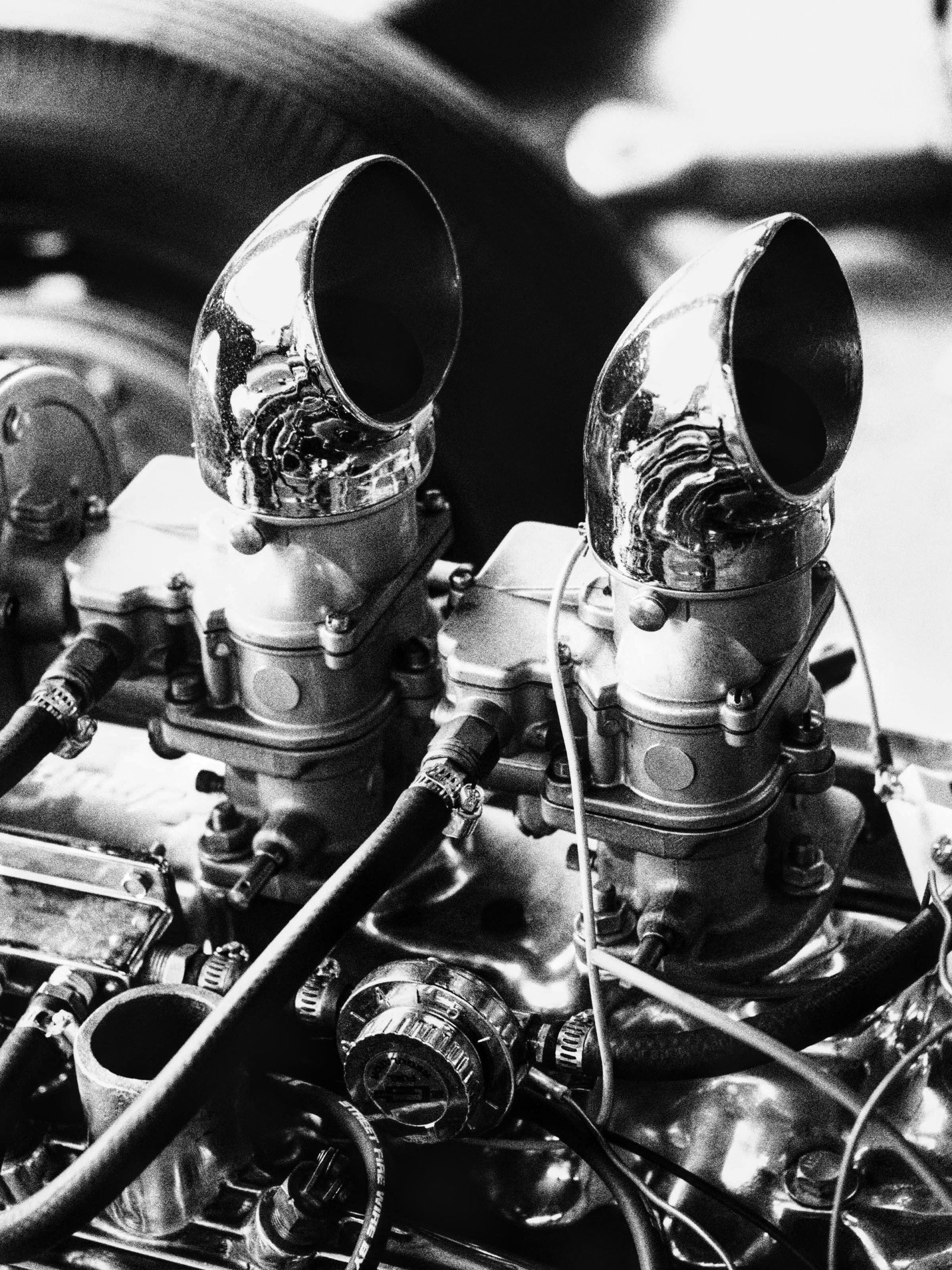
For motorcycle enthusiasts, the sound of an engine is more than just noise; it is a mechanical symphony. For decades, the roads were dominated by the high-pitched, energetic buzz of two-stroke engines—a sound that signalled raw power and instant acceleration.
Today, that sound has largely been replaced by the deeper, rhythmic rumble of the four-stroke engine. This shift wasn’t just a change in consumer preference; it was a fundamental transformation in how we view transportation, efficiency, and environmental responsibility.
Suppose you are new to the world of motorcycling or are curious about what happens inside the metal casing of your vehicle. In that case, the difference between these two engine types might seem technical and confusing.
However, understanding the distinction is crucial. It explains why certain vintage bikes are highly coveted collectors’ items, why modern bikes are more fuel-efficient, and why the government stepped in to change the industry forever.
This guide will break down the mechanics, history, and performance differences between two-stroke and four-stroke engines. We will explore the “golden era” of two-strokes in India, the reasons behind their eventual ban, and why the four-stroke engine reigns supreme today. Whether you are a student of mechanics or a rider looking to understand your machine better, this comprehensive comparison will provide the clarity you need.
The Mechanics of Combustion
To understand the difference, we must first understand the similarities. Both engine types are internal combustion engines (ICE). They generate power by burning a mixture of fuel and air inside a cylinder. This explosion pushes a piston down, which turns a crankshaft, eventually sending power to the wheels.
The “stroke” refers to the movement of the piston inside the cylinder. A stroke can be upward (compression) or downward (power/intake). The core difference lies in how many strokes it takes to complete one full power cycle.
How a 2-Stroke Engine Works
In a two-stroke engine, the entire cycle of intake, compression, combustion, and exhaust is completed in just two movements of the piston (one up, one down) and one revolution of the crankshaft.
- Compression Stroke (Upward): As the piston moves up, it compresses the fuel-air mixture above it. Simultaneously, the rising piston creates a vacuum in the crankcase below, sucking in fresh fuel and air.
- Power Stroke (Downward): The spark plug ignites the compressed fuel. The explosion pushes the piston down, turning the crankshaft. As the piston descends, it uncovers the exhaust port (letting smoke out) and forces the fresh fuel mixture from the crankcase into the combustion chamber.
It is a frantic, fast-paced process where events happen simultaneously. This efficiency of movement is why two-strokes are known for their “instant” power delivery.
How a 4-Stroke Engine Works
A four-stroke engine is more methodical. It requires four distinct piston movements (two up, two down) and two revolutions of the crankshaft to create power.
- Intake (Down): The inlet valve opens, and the piston moves down, sucking in air and fuel.
- Compression (Up): The valves close, and the piston moves up, squeezing the mixture.
- Combustion (Down): The spark plug fires, causing an explosion that forces the piston down. This is the only stroke that generates power.
- Exhaust (Up): The exhaust valve opens, and the piston moves up, pushing the burnt gases out.
Think of the four-stroke as a “Suck, Squeeze, Bang, Blow” process. It is separate, distinct, and controlled.
The Power-to-Weight Ratio Advantage
One of the most significant reasons two-stroke engines were so popular—and remain popular in specific applications like chainsaws and dirt bikes—is their power-to-weight ratio.
Because a two-stroke engine fires the spark plug once every revolution, it theoretically produces twice as many “power strokes” as a four-stroke engine operating at the same speed. A four-stroke engine has to spin the crankshaft twice to get one explosion.
Furthermore, two-stroke engines are physically simpler. They do not need heavy valve trains, camshafts, pushrods, or complex oil pumps. This lack of components makes them incredibly light. When you combine a lightweight engine with a firing cycle that happens twice as often, you get a machine that accelerates with ferocity. This is why a 100cc two-stroke bike from the 1990s often feels faster and more aggressive off the line than a modern 150cc four-stroke commuter.
The Maintenance and Reliability Factor
While the two-stroke engine is simpler, simplicity does not always equal longevity. The design differences lead to drastically different maintenance requirements and lifespans.
Lubrication Challenges in 2-Strokes
In a four-stroke engine, the oil is kept separate in a sump. It is pumped around the engine to lubricate moving parts and then returns to the sump to be used again. It is a closed loop.
In a two-stroke engine, the crankcase is part of the induction tract (fuel moves through it). This means you cannot have a pool of oil sitting at the bottom. Instead, oil must be mixed directly with the petrol (pre-mix) or injected into the fuel stream. This oil lubricates the cylinder as it burns.
This is known as a “total loss” lubrication system because the oil is burned up and expelled out of the exhaust. This leads to higher wear and tear on piston rings and cylinder walls, often requiring more frequent engine rebuilds.
The Reliability of 4-Strokes
Four-stroke engines run cleaner and cooler. Because the oil is constantly recirculated and filtered, the internal components are better protected against friction and heat. A well-maintained four-stroke engine can run for tens of thousands of kilometres with only routine oil changes. This Reliability is a major selling point for daily commuters who value consistency over raw, explosive speed.
The Environmental Impact and Efficiency
This is the category where the battle was truly lost for the two-stroke engine. As the world became more conscious of air quality and climate change, the inherent flaws of the two-stroke design became impossible to ignore.
Fuel Efficiency
Two-stroke engines are notoriously thirsty. Because the intake and exhaust ports are often open at the same time during the cycle, a certain amount of fresh, unburnt fuel escapes out of the exhaust pipe before it can be used. This is literally pouring money—and energy—down the drain.
Four-stroke engines, with their precise valve timing, ensure that almost all the fuel is trapped inside the cylinder and burned completely. This results in significantly better mileage, a crucial factor for the average consumer.
Pollution and Emissions
The “blue smoke” that trails behind an old scooter or motorbike is the visual evidence of a two-stroke engine’s environmental cost. That smoke consists of burnt oil and unburnt hydrocarbons.
- Particulate Matter: Burning oil produces heavy particulate matter, which contributes to smog and respiratory issues.
- Unburnt Fuel: The escaping raw fuel releases high levels of hydrocarbons, which are potent greenhouse gases.
In contrast, four-stroke engines burn fuel cleanly and, when equipped with catalytic converters, release a fraction of the harmful emissions.
The Indian Context: A Historical Perspective
To truly appreciate the evolution of motorcycle engines, one must look at the specific history of the Indian automotive market. For decades, the two-stroke engine was the heartbeat of the nation’s roads.
The Glory Days
From the 1980s through the early 2000s, legendary motorcycles like the Yamaha RX100, the Rajdoot 350, and the Suzuki Shogun ruled the streets. These bikes were affordable, easy to repair, and incredibly fast for their size. For a developing economy, the low cost of manufacturing two-stroke engines made personal transportation accessible to millions of middle-class families. They were the engines of the people—powering everything from family scooters to sporty commuter bikes.
The Turning Point: 2005
By the turn of the millennium, the air quality in major Indian cities was deteriorating rapidly. The government recognised that two-wheeled vehicles, which constituted the vast majority of traffic, were significant contributors to this pollution.
In 2000, stricter emission norms (Bharat Stage II) were introduced, which tightened the noose around two-stroke technology. However, the definitive blow came around 2005. While the government didn’t explicitly ban the ownership of two-stroke bikes, the emission regulations became so stringent that manufacturers could no longer make two-stroke engines compliant without making them prohibitively expensive.
Consequently, production ceased. The market shifted almost overnight. Manufacturers like Hero Honda (now Hero MotoCorp) had already been championing four-stroke technology with bikes like the Splendour, focusing on “Fill it, Shut it, Forget it” fuel efficiency. As fuel prices rose and environmental awareness grew, the consumer preference shifted permanently toward the four-stroke engine.
Why 4-Strokes Are the Standard Today
Today, if you walk into a showroom to buy a motorcycle, you are almost guaranteed to be looking at a four-stroke machine. The transition is complete, and the reasons are multifaceted.
1. Regulatory Compliance
As mentioned, meeting Euro norms and Bharat Stage (BS) VI emission standards is nearly impossible for a conventional carburettor-fed two-stroke engine. Four-stroke engines, especially with fuel injection, can be precisely tuned to minimise harmful exhaust gases.
2. User Experience
While enthusiasts love the “buzz” of a two-stroke, the average rider prefers the refined experience of a four-stroke. They vibrate less, are quieter, and deliver power in a smooth, linear fashion that is easier to control in city traffic. There is also the convenience factor—no more measuring oil to mix with your petrol at the gas station.
3. Longevity and Resale Value
For a daily commuter, the vehicle is an asset. Four-stroke engines hold up better over time. They don’t require “decarbonising” (cleaning carbon buildup from the exhaust port) as frequently as two-strokes, and they generally run for years without needing major engine work.
Are Two-Strokes Gone Forever?
Despite its disappearance from public roads, the two-stroke engine is not dead. It has simply found a new niche.
In the world of off-road motorcycling (motocross and enduro), two-strokes are still very popular. Modern engineering has introduced direct fuel injection to two-stroke dirt bikes, solving many of the efficiency and emissions issues. In these competitive environments, the lightweight nature and explosive power of the engine are still prized above all else.
However, for the street-legal motorcycles that transport us to work and school, the four-stroke engine is the undisputed king. It represents a maturity in engineering—a balance of performance, economy, and environmental stewardship.
Conclusion
The evolution from two-stroke to four-stroke engines is a fascinating case study in how technology adapts to the needs of society. The two-stroke engine was the hero of a different era—a time when raw power and simplicity were the primary goals. It mobilised nations and created a culture of speed and excitement that still exists in vintage bike clubs today.
However, the four-stroke engine represents the future we needed. It offered a solution to the growing environmental crisis and provided riders with machines that were reliable, efficient, and refined. While we may miss the distinct smell of pre-mix fuel and the high-pitched ring of a Yamaha RX100, the shift to four-stroke technology has undoubtedly made our roads cleaner and our journeys more sustainable.
As we look ahead, the conversation is shifting once again, this time from four-stroke internal combustion to electric powertrains. But regardless of what powers the bike of tomorrow, understanding the mechanical heart of the machine helps us appreciate the ride today.
