
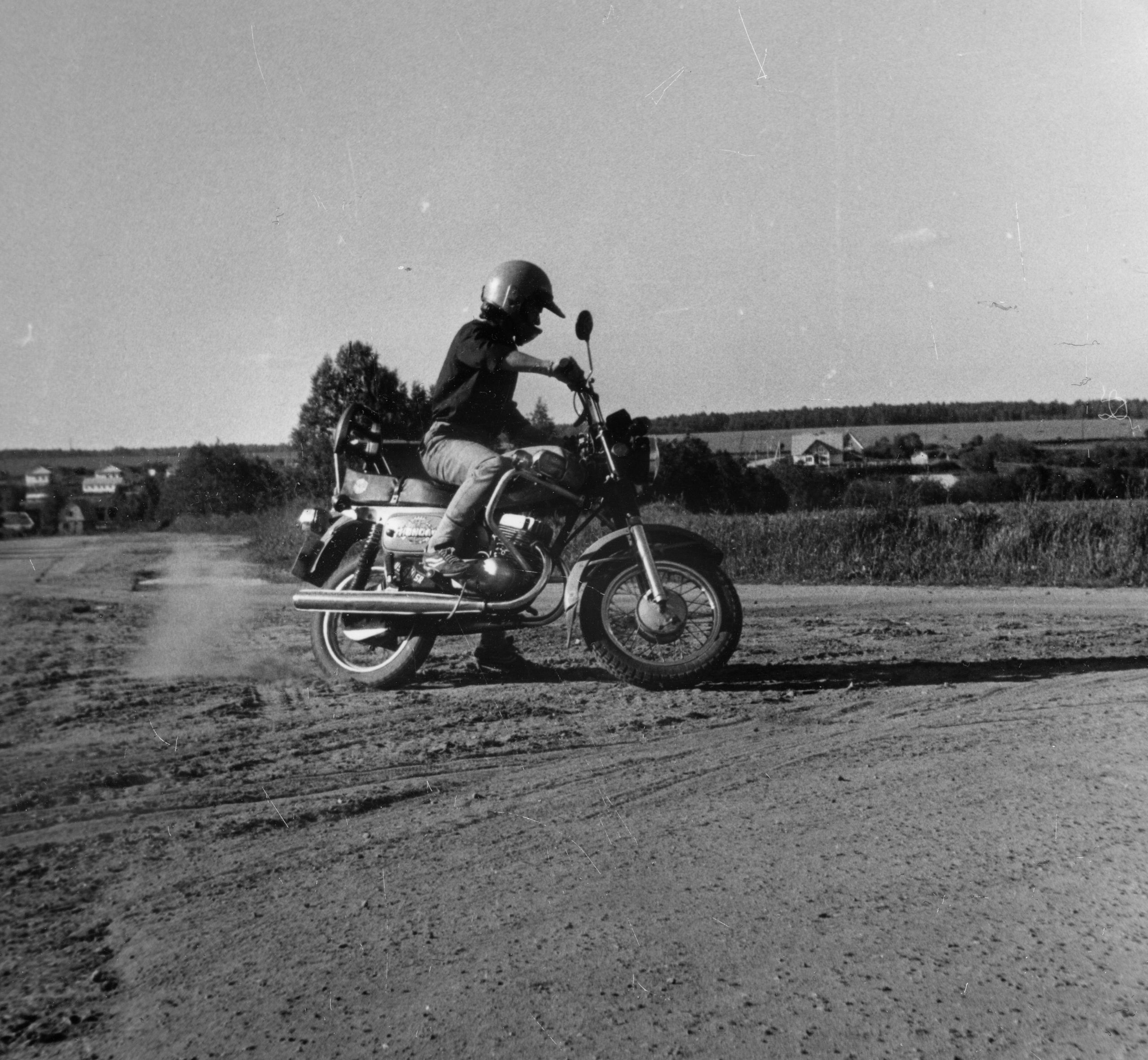
When the first motorcycle sputtered to life, its creators could not have predicted the machine’s immense future. They were engineers and inventors, focused on the mechanics of self-propulsion. They couldn’t have known their creation would one day roar down open highways, cultivate a global community, and become a powerful symbol of freedom and rebellion. The story of the motorcycle is not just about gears and engines; it’s about the birth of a culture, a brotherhood and sisterhood that would echo through generations.
This journey through time explores the evolution of the motorcycle, from its humble beginnings as a motorised bicycle to the powerful, sophisticated machines we know today. We will look at the key moments, groundbreaking innovations, and cultural shifts that shaped this iconic vehicle. Understanding this history reveals more than just engineering milestones; it uncovers the story of how two wheels and an engine came to represent a way of life, an identity, and a shared passion for the open road.
From the first steam-powered contraptions to the electric superbikes of the future, the motorcycle has always been more than just a mode of transportation. It is a testament to human ingenuity and our unyielding desire for adventure. Join us as we trace the path of this incredible invention and discover how it has captured the hearts and minds of millions around the world, creating a family unlike any other.
The Dawn of the Two-Wheeled Machine
The story of the motorcycle begins not with a roar, but with a puff of steam. In the mid-19th century, inventors across Europe and America were experimenting with ways to motorise personal transport. The bicycle, a recent invention itself, was the natural starting point.
Steam-Powered Pioneers
The first true motorcycle is a subject of some debate, but many historians point to the Roper steam velocipede, built by Sylvester Howard Roper in Massachusetts around 1867. This “motorcycle” was essentially a modified bicycle frame powered by a small, two-cylinder steam engine.
It was a crude machine, with a charcoal-fired boiler suspended between the wheels. Roper often demonstrated his invention at fairs and circuses, astonishing crowds who had never seen a self-propelled two-wheeled vehicle. Tragically, Roper died in 1896 while riding an improved version of his steam velocipede, suffering a heart attack during a public speed trial.
Around the same time in France, Louis-Guillaume Perreaux developed his own steam-powered velocipede. Patented in 1869, the Michaux-Perreaux steam velocipede used a single-cylinder steam engine to power the rear wheel. Like Roper’s creation, it was a bold experiment that laid the conceptual groundwork for what was to come, even if steam power ultimately proved too cumbersome for personal vehicles.
The Internal Combustion Engine Arrives
The real breakthrough came with the development of the internal combustion engine. In 1885, German inventors Gottlieb Daimler and Wilhelm Maybach created what is widely considered the first gasoline-powered motorcycle: the Daimler Reitwagen (or “riding car”). This vehicle was built primarily to test their new, compact internal combustion engine.
The Reitwagen was a far cry from modern motorcycles. It had a wooden frame, iron-banded wooden wheels, and two small outrigger wheels for stability, making it more of a four-wheeled vehicle. Its single-cylinder engine produced a mere half-horsepower and could reach a top speed of about 7 mph (11 km/h). Despite its primitive design, the Reitwagen was a pivotal moment. It proved that a gasoline engine could successfully power a two-wheeled vehicle, setting the stage for the first wave of commercial production.
The First Motorcycle Boom
As the 19th century drew to a close, the motorcycle transitioned from an inventor’s novelty to a commercially viable product. The first company to mass-produce motorcycles was Hildebrand & Wolfmüller in Germany, starting in 1894. Their machine was the first to be called a “motorcycle” (or Motorrad in German). It featured a water-cooled, two-cylinder engine and was more practical than its predecessors, though it still lacked a clutch or variable gears.
Across the English Channel, British innovators were also making strides. Excelsior Motor Company, originally a bicycle manufacturer, began producing its first motorcycle in 1896. In the United States, the Orient-Aster, built in 1898, is often credited as the first American-made production motorcycle.
The Birth of Iconic Brands
The early 1900s were a period of rapid innovation and the birth of brands that would become legends.
Indian Motorcycle Manufacturing Company was founded in 1901 by George M. Hendee and Oscar Hedstrom in Springfield, Massachusetts. Their first models were chain-driven and featured advanced designs for their time. Indian quickly became the largest motorcycle manufacturer in the world.
Triumph Engineering Co Ltd in Great Britain produced its first motorcycle in 1902. The Triumph No. 1 was a reinforced bicycle fitted with a Belgian-made Minerva engine.
In 1903, in a small shed in Milwaukee, Wisconsin, William S. Harley and Arthur Davidson, later joined by Walter and William Davidson, built their first motorcycle. This was the humble beginning of Harley-Davidson. Their early models were simple and reliable, designed for the unpaved roads of early 20th-century America.
These early motorcycles were often unreliable and dangerous.
They had rudimentary brakes (sometimes none at all), basic suspension, and engines prone to failure. Yet, they captured the public’s imagination, offering a sense of freedom and speed that was previously unattainable for the average person.
Motorcycles in War and Peace
The two World Wars had a profound impact on motorcycle development. Motorcycles were valued for their speed, mobility, and ability to traverse difficult terrain, making them ideal for reconnaissance missions and dispatch riders.
During World War I, Harley-Davidson and Indian in the U.S., and Triumph and Norton in the U.K., supplied tens of thousands of motorcycles to the Allied forces. The demands of military use spurred significant improvements in reliability, durability, and engine performance. For instance, the need for dispatch riders to navigate muddy, shell-cratered roads led to better suspension and more robust frames.
World War II saw even greater use of motorcycles. Harley-Davidson produced nearly 90,000 WLA models for the U.S. military and its allies. In Germany, BMW and Zündapp manufactured heavy-duty motorcycles, often equipped with sidecars, which became a signature vehicle of the German army. The war acted as a crucible, forging stronger, more capable machines and introducing a generation of young men to the thrill of riding.
After the wars, a surplus of military motorcycles flooded the civilian market. Many returning soldiers, having experienced the freedom of the open road, bought these bikes and modified them for personal use. This post-war period was crucial in establishing the motorcycle as a vehicle for recreation and personal expression, not just utilitarian transport.
The Rise of Motorcycle Culture
The 1950s and 60s marked the emergence of a distinct and often controversial motorcycle culture. In the United States, this was the era of the “outlaw biker,” a phenomenon fueled by a handful of real-life events and sensationalised by the media.
The Hollister “Riot” and The Wild One
In 1947, a motorcycle rally in Hollister, California, got out of hand. Reports of drunken revelry and disorderly conduct were exaggerated by the press, creating a lurid image of bikers as a lawless menace. This event, along with a sensational photo in Life magazine, inspired the 1953 film The Wild One, starring Marlon Brando. Brando’s portrayal of Johnny Strabler, the brooding, leather-clad leader of a motorcycle gang, cemented the image of the biker as a rebellious anti-hero. The black leather jacket, jeans, and boots became the unofficial uniform for a generation of riders.
This period saw the formation of “one-percenter” motorcycle clubs, a term said to have originated from a statement by the American Motorcyclist Association (AMA) that 99% of motorcyclists were law-abiding citizens. These clubs embraced the outlaw image and developed their own codes of conduct and brotherhood.
The British Invasion: Rockers and Mods
In Britain, a different kind of motorcycle subculture emerged. The “Rockers,” also known as “Ton-Up Boys,” were young enthusiasts who gathered at transport cafés like the Ace Café in London. They customised their British-made bikes, such as Triumphs and Nortons, to create “café racers”—stripped-down, lightweight machines designed for speed and agility. Their goal was to “do the ton” (exceed 100 mph).
The Rockers were often at odds with the “Mods,” another youth subculture that favoured Italian scooters, like Vespas and Lambrettas, and sharp suits. Their clashes, most famously at seaside towns like Brighton in 1964, became legendary and were immortalised in the 1979 film Quadrophenia.
The Japanese Revolution
While American and British manufacturers dominated the first half of the 20th century, the 1960s saw the rise of a new global powerhouse: Japan. Companies like Honda, Yamaha, Suzuki, and Kawasaki entered the market with motorcycles that were technologically advanced, reliable, and affordable.
Honda’s “You Meet the Nicest People on a Honda” advertising campaign was a masterstroke. It directly challenged the negative outlaw biker image and positioned motorcycling as a fun, respectable activity for everyone. The Honda Super Cub, introduced in 1958, became the best-selling motor vehicle in history, offering cheap, reliable transport to millions worldwide.
In 1969, Honda released the CB750, a machine that changed motorcycling forever. With its four-cylinder engine, electric starter, and front disc brake, it was the first “superbike.” It offered performance that was previously available only on expensive, exotic racing machines, but at a mass-market price. The CB750 set a new standard, and American and European manufacturers struggled to keep up. The Japanese motorcycle industry’s focus on engineering excellence and mass production reshaped the global market and made high-performance motorcycles accessible to a much wider audience.
Diversification and the Modern Era
From the 1980s onwards, the motorcycle market has become increasingly diverse, with specialised machines designed for every imaginable purpose.
- Sport Bikes: Descendants of the superbikes, these machines are built for speed and handling, with powerful engines and aerodynamic bodywork.
- Cruisers: Following the classic American style of Harley-Davidson, cruisers are designed for relaxed, long-distance riding with low seats and high handlebars.
- Touring Bikes: These are the long-haul specialists, built for comfort on cross-country journeys with large fairings, comfortable seats, and ample luggage capacity.
- Dual-Sport/Adventure Bikes: Growing in popularity, these versatile machines are designed for both on-road and off-road use, inspired by long-distance rallies like the Paris-Dakar.
- Off-Road/Motocross Bikes: Lightweight and rugged, these are built purely for dirt tracks and trails.
The modern era has also seen significant technological advancements, including fuel injection, anti-lock braking systems (ABS), traction control, and advanced computer-managed engine modes.
The Future is Electric
Today, the motorcycle industry is at another turning point. With growing concerns about climate change and emissions, electric motorcycles are emerging as the next frontier. Companies like Zero Motorcycles and Harley-Davidson (with its LiveWire brand) are pioneering this new technology.
Electric motorcycles offer instant torque, silent operation, and zero emissions. While challenges like range anxiety, charging infrastructure, and high costs remain, the technology is rapidly improving. Just as the internal combustion engine replaced steam, electric power may define the next chapter in the history of the motorcycle, paving the way for a new generation of riders and a sustainable future for this beloved machine.
A Legacy Forged in Steel and Spirit
From a steam-powered bicycle to an electric superbike, the motorcycle has travelled a long and winding road. It has been a tool of war, a symbol of rebellion, and a vehicle for adventure. More than any other machine, it offers a direct, unfiltered connection to the world, a blend of risk and reward that continues to captivate millions.
The history of the motorcycle is not just a story of technological progress. It is the story of the communities that formed around it—the inventors, the racers, the soldiers, the outlaws, and the everyday riders. It is a story of a shared passion that transcends borders and generations. The creators of that first Reitwagen couldn’t have imagined the culture their invention would inspire, but they tapped into a fundamental human desire for freedom and empowerment. That spirit is the enduring legacy of the motorcycle, a legacy that will continue to roar down the open roads of the future.
