
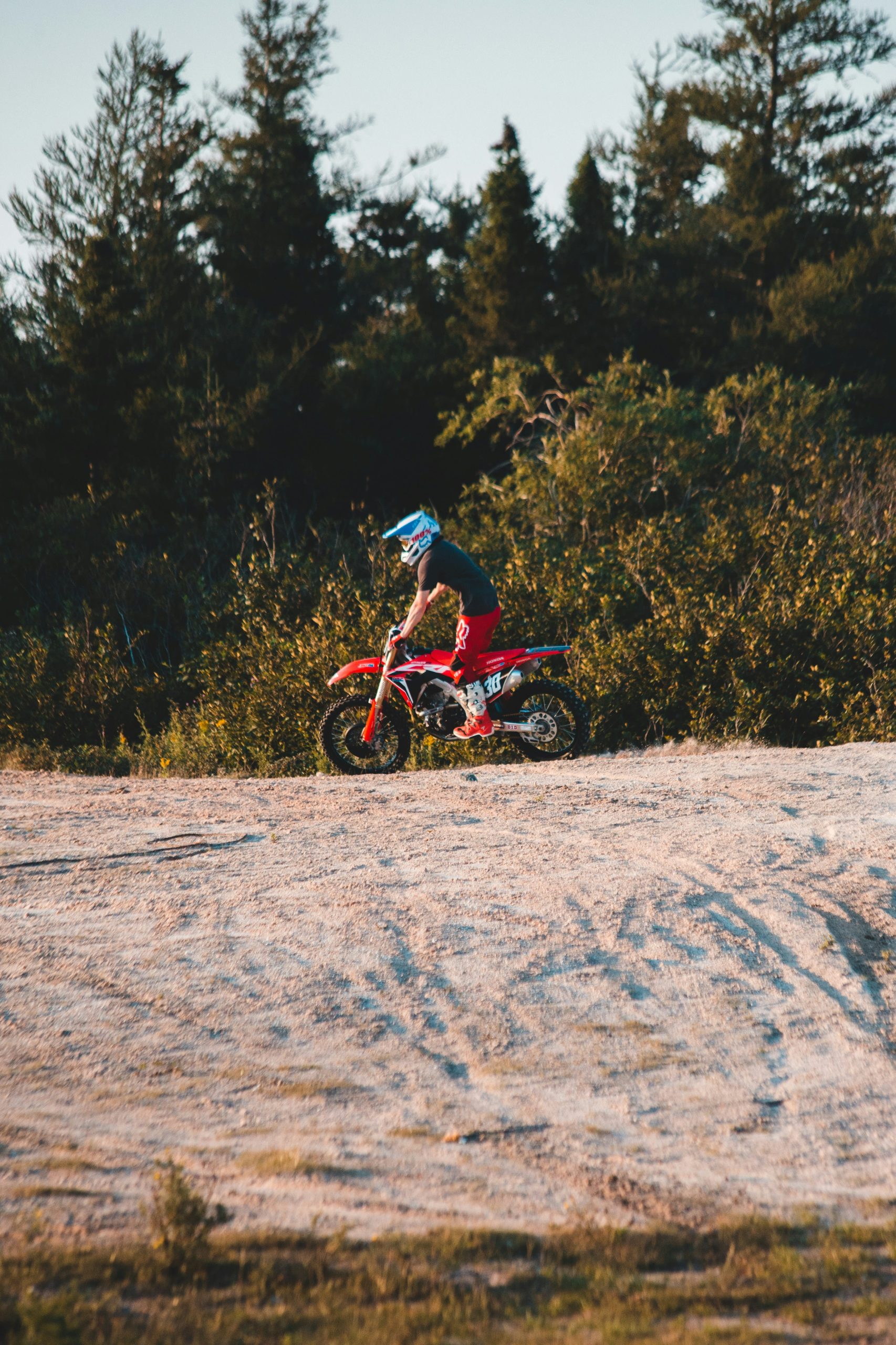
Every child is a dreamer. Some dream of soaring through the air on a powerful machine, while others dream of exploring rugged trails deep in the forest. If your child has expressed an interest in two-wheeled adventures, you might have heard the terms “dirt biking” and “motocross” thrown around. While often used interchangeably, these are distinct activities with unique requirements, equipment, and learning environments.
Understanding the difference is crucial for parents. Whether you are looking for a weekend hobby to build resilience or considering a competitive path for your aspiring athlete, knowing the nuances will help you make informed decisions about your child’s safety, equipment, and future development.
This guide will break down the specific differences between general dirt biking and the competitive sport of motocross, helping you decide which path aligns best with your child’s goals and your family’s values.
What is Dirt Biking?
At its core, dirt biking is the umbrella term for riding a motorcycle off-road. It encompasses a wide range of activities, from casual trail riding to agricultural work and competitive racing. When people refer to “dirt biking” in a recreational sense, they are usually talking about trail riding or “enduro” riding.
The Nature of the Ride
General dirt biking is often an endurance-based activity. Riders navigate natural terrain, including forests, deserts, mountains, and rocky paths. The focus is less on speed and jumping, and more on technical skill, vehicle control, and stamina over long distances.
This activity is fantastic for character building. It teaches riders how to problem-solve when obstacles arise—like a fallen log or a steep, muddy incline—and requires a high level of situational awareness. It fosters independence and resilience, as riders must often rely on their own skills to navigate challenging landscapes.
The Environment
Unlike the controlled environment of a race track, dirt biking takes place in the open world. This offers a sense of freedom and exploration that appeals to many young riders. However, it also presents variable conditions. The terrain changes with the weather, and obstacles are not man-made or standardised.
Equipment Differences
Bikes designed for general dirt biking (often called trail bikes or enduro bikes) are engineered for comfort and durability over long periods.
- Suspension: Softer suspension absorbs bumps from rocks and roots, providing a smoother ride over rough, uneven ground.
- Gearing: These bikes typically have wider gear ratios, allowing for low-speed maneuvering in tight technical sections and higher speeds on open fire roads.
Features: You will often find headlights, kickstands, and larger fuel tanks on these bikes, as they are intended for longer excursions where pit stops aren’t available.
What is Motocross?
Motocross (MX) is a specific subset of dirt biking. It is a competitive racing sport held on enclosed, man-made circuits. If dirt biking is a hike through the woods, motocross is a sprint on a track.Motocross is intense, fast-paced, and physically demanding in a different way than trail riding. Races are typically short sprints (ranging from 10 to 30 minutes plus two laps) where riders compete directly against one another. The goal is simple: cross the finish line first.
This sport demands incredible focus and discipline. Riders must memorise track layouts, master the art of cornering at high speeds, and navigate large jumps. The competitive nature of motocross can be excellent for teaching children about sportsmanship, goal setting, and the direct correlation between hard work (practice) and success (winning).
The Environment
Motocross tracks are closed circuits featuring specific obstacles like tabletop jumps, rhythm sections (series of smaller jumps), whoops (series of small bumps), and banked corners called berms. The soil is often groomed and watered to provide optimal traction. While the environment is more controlled than a forest trail, the proximity to other racers adds a layer of complexity and risk.
Equipment Differences
Motocross bikes are built for one purpose: racing performance.
- Suspension: Stiff suspension is necessary to handle the massive impact of landing large jumps and hitting obstacles at high speed.
- Power: These engines are tuned for explosive acceleration. They are snappy and aggressive, designed to get the rider out of a corner and over a jump instantly.
- Weight: Motocross bikes are stripped of any unnecessary weight. You won’t find headlights, kickstands, or electric starters (on older models). They have small fuel tanks because they only need to last for the duration of a single race.
Key Differences at a Glance
To help you visualise the distinction, here is a breakdown of the primary differences:
1. The Terrain
- Dirt Biking: Unpredictable, natural terrain. Mud, rocks, roots, steep hill climbs, and tight single-track trails.
- Motocross: Groomed, man-made tracks. Consistent soil (dirt, sand, or clay), standardised jumps, and clearly defined lanes.
2. The Objective
- Dirt Biking: Exploration, endurance, and technical navigation. The goal is often to complete the ride or enjoy the journey.
- Motocross: Speed and competition. The goal is to complete a set number of laps faster than the other racers.
3. Physical Demands
- Dirt Biking: Requires long-term stamina. A ride might last all day, requiring sustained energy and concentration.
- Motocross: Requires high-intensity cardiovascular fitness and explosive strength. A rider’s heart rate can remain near maximum for the entire duration of a 20-minute race.
Why the Distinction Matters for Parents
Choosing the right path for your child involves understanding these differences. If you buy a stiff, aggressive motocross bike for a child who wants to explore trails, they will likely have a miserable, uncomfortable experience. The bike will be prone to stalling at low speeds, and the suspension will feel harsh over rocks.
Conversely, taking a heavy, soft-suspended trail bike onto a motocross track can be dangerous. The suspension may bottom out on jumps, leading to loss of control, and the bike may lack the power needed to clear obstacles safely.
Safety Considerations
Safety is a nurturing environment’s top priority. Both sports carry risks, but they are different types of risks.
- Motocross Risk: High-speed crashes, collisions with other riders, and impacts from jumping.
- Dirt Biking Risk: Collisions with trees or rocks, getting lost, or mechanical failures far from help.
Regardless of the choice, proper protective gear—helmets, boots, goggles, chest protectors, and knee braces—is non-negotiable.
Educational Parallels: Discipline and Opportunity
Just as a boarding school creates an environment where discipline meets opportunity, off-road sports provide a structured way for children to develop essential life skills.
Building Resilience
Whether stuck in a mud hole on a trail or recovering from a crash on the track, riders learn to pick themselves (and their bikes) up and keep going. This builds a “get back on the horse” mentality that serves them well in academics and future careers.
Focus and Mental Clarity
Riding a motorcycle requires 100% mental engagement. There is no room for distraction. For children who struggle with focus in a traditional classroom, the intense concentration required to ride can be therapeutic and confidence-building. It teaches them how to channel their energy into a singular task.
Social Development
Motocross is a highly social sport. Families often spend weekends at the track, creating a community of like-minded individuals. Trail riding also encourages teamwork, as riders look out for one another and help each other through difficult terrain.
Choosing the Right Bike for the Right Sport
If you have decided which avenue suits your child best, the next step is selecting the machinery.
For the Aspiring Motocross Racer
Look for bikes designated with “R” or “SX” in their model names (e.g., Honda CRF150R, KTM 85 SX).
- Two-Stroke vs. Four-Stroke: In the youth classes, two-stroke bikes (like 65cc and 85cc) are very popular due to their light weight and high power. As riders age, they often move to 250cc four-strokes.
- Maintenance: Race bikes require rigorous maintenance. Piston changes, oil changes, and air filter cleaning are frequent necessities.
For the Trail Explorer
Look for bikes designated with “F” (often meaning family or trail) or “X” (cross country). Examples include the Honda CRF125F or the Yamaha TT-R125.
- User-Friendly Power: These bikes have smooth, linear power delivery that isn’t intimidating for beginners.
- Low Maintenance: Trail bikes are built to run for years with basic maintenance (oil changes and chain adjustments).
A Note on “Cross-Country” Racing
There is a middle ground called “Cross-Country” or “Hare Scrambles” racing. This combines elements of both disciplines. It involves racing on a marked course through natural terrain (woods, fields) but may include sections of a motocross track.
Bikes built for this (like the Yamaha YZ250X or KTM 250 XC) are hybrid machines. They have the lightweight chassis of a motocross bike, but with softer suspension and wider gear ratios tuned for off-road racing. This is often a great compromise for the student who wants to compete but enjoys the variety of natural terrain.
Nurturing the Whole Child
Ultimately, whether your child chooses the discipline of the track or the freedom of the trail, the goal remains the same: holistic growth.
Frequently Asked Questions
Can my child use a motocross bike on trails?
Technically, yes, but it is not ideal. The stiff suspension will make for a bumpy, fatiguing ride, and the tall first gear makes it difficult to ride slowly over technical obstacles without stalling. Additionally, motocross bikes are loud and lack spark arrestors, which are often legally required on public trails to prevent forest fires.
What is the best age to start dirt biking?
Children can start as young as 3 or 4 years old on training-wheel-equipped 50cc bikes. However, the “best” age is whenever the child shows genuine interest and the physical coordination to handle a bicycle safely.
Is motocross more dangerous than other sports?
Like any high-speed sport, there are risks. However, with proper training, safety gear, and supervision, the risks can be managed. Statistically, injury rates in motocross are comparable to contact sports like football or ice hockey.
Do I need a trailer to transport dirt bikes?
Not necessarily. If you have a pickup truck, bikes can be secured in the bed. Hitch-mounted motorcycle carriers are also a popular option for SUVs. However, a small utility trailer is the easiest way to transport multiple bikes and gear.
Final Thoughts
The world of off-road motorcycling offers a unique classroom for life. It is a place where physics, mechanics, athletics, and mental fortitude intersect.
By understanding the difference between dirt biking and motocross, you can guide your child toward the activity that best fits their personality and your family’s lifestyle. Whether they are chasing a checkered flag or a sunset on a mountain ridge, the skills they learn—focus, resilience, and discipline—will stay with them long after the engine is turned off.
If you are looking for an educational environment that values this kind of holistic development and character building, consider how a structured boarding school experience can further nurture your child’s potential.
