
The world is constantly changing, and for the next generation, understanding these shifts is crucial. Just as we prepare our children for their future careers through holistic education and character building, we must also look at the future of the planet they will inherit.
One of the most exciting developments in science and technology today is the rise of green hydrogen. It’s a topic that combines chemistry, engineering, and environmental stewardship—subjects that are vital for students interested in becoming the scientists and leaders of tomorrow.
You might have heard the term “hydrogen” in chemistry class or news reports, but “green hydrogen” is capturing global attention for a specific reason: it offers a solution to some of the hardest problems in climate change.
While solar panels and wind turbines are fantastic for powering our homes and schools, they have limitations when it comes to heavy industries like steel manufacturing or shipping. This is where green hydrogen steps in. It represents a frontier of innovation that our students—the future engineers and policy-makers—will likely engage with in their professional lives.
In this deep dive, we will explore what green hydrogen is, why it is being hailed as a “zero-carbon fuel,” and how it is produced. We will look at its applications in sectors that are difficult to electrify and discuss why this matters for the future global economy. For parents and students alike, understanding these technologies is about more than just science; it’s about being future-ready.
What is Green Hydrogen?
To understand green hydrogen, we first need to look at hydrogen itself. Hydrogen is the most abundant element in the universe. It’s in the water we drink and the air we breathe. However, on Earth, it rarely exists alone; it is almost always attached to other elements (like oxygen in water, H2O). To use hydrogen as fuel, we have to separate it.
Traditionally, separating hydrogen has been a dirty process. Most hydrogen produced today is “gray hydrogen,” made from natural gas in a process that releases carbon dioxide into the atmosphere. There is also “blue hydrogen,” where the carbon emissions are captured and stored, but this is still reliant on fossil fuels.
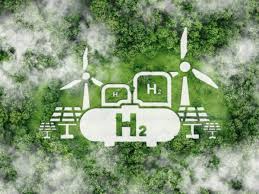
Green hydrogen is different. It is produced using a process called electrolysis, powered entirely by renewable energy sources like wind or solar power. The only byproduct of burning green hydrogen is water vapor. There are no carbon emissions, no pollutants, just clean energy.
The Science of Electrolysis
The process of electrolysis is a fascinating application of chemistry and physics—topics that students encounter in our science labs. An electrolyzer is a device that uses electricity to split water molecules into hydrogen and oxygen. When that electricity comes from a renewable source, the resulting hydrogen is “green.”
This simple yet powerful reaction is the cornerstone of a cleaner future. It allows us to store energy from the sun and wind in a chemical form (hydrogen) that can be transported and used when needed. It’s a perfect example of how theoretical science learned in the classroom translates into real-world solutions.
Solving the “Hard-to-Electrify” Problem
We often hear that the solution to climate change is to “electrify everything.” Electric cars are becoming common on our roads, and heat pumps are warming our homes. But electricity has limits. Batteries are heavy and expensive, making them impractical for powering massive cargo ships crossing the ocean or airplanes flying across continents.
Furthermore, some industrial processes require intense heat that electricity struggles to provide efficiently. This is known as the “hard-to-electrify” challenge. Green hydrogen offers a bridge across this gap.
Decarbonizing Heavy Industry
Heavy industries like steel and chemical manufacturing are the backbone of modern infrastructure. However, they are also significant contributors to global carbon emissions. Steel production alone accounts for about 7-9% of global CO2 emissions because it traditionally uses coal to strip oxygen from iron ore.
Green hydrogen can replace coal in this process. By using hydrogen instead of carbon to reduce iron ore, the byproduct is water rather than carbon dioxide. This transition to “green steel” is not just a concept; major projects are already underway in Europe and Asia. For students interested in industrial engineering or materials science, this transformation represents a massive career opportunity.
Revolutionizing the Chemical Sector
The chemical industry is another area ripe for disruption. Currently, hydrogen is a key ingredient in making ammonia for fertilizers, which are essential for feeding the global population. However, this hydrogen is almost exclusively gray hydrogen derived from fossil fuels.
Switching to green hydrogen for ammonia production could drastically reduce the carbon footprint of our food supply chain. It’s a complex challenge that requires innovative thinking—the kind of critical thinking we encourage in our classrooms every day.
The Future of Long-Haul Transportation
While electric vehicles (EVs) are perfect for commuting and city driving, they hit a wall when it comes to long-distance heavy transport. The batteries required to power a semi-truck for a thousand miles would be incredibly heavy, reducing the amount of cargo the truck could carry.
Hydrogen fuel cells offer a compelling alternative. A fuel cell converts hydrogen gas into electricity to power an electric motor. These vehicles fuel up in minutes, similar to diesel trucks, and have a much longer range than battery-electric equivalents.
Shipping and Aviation
The potential extends to the seas and skies. The shipping industry moves 80% of global trade and runs on heavy fuel oil, one of the dirtiest fuels in existence. Green hydrogen—or fuels derived from it, like green ammonia—could power these massive vessels without polluting the oceans or air.
Similarly, aviation is looking toward hydrogen. While battery-powered commercial flights are likely decades away due to weight constraints, hydrogen (which is very light) could power planes. Engineers are currently designing aircraft that use hydrogen combustion or fuel cells, opening up a new era of sustainable flight.
Challenges and Opportunities
If green hydrogen is so amazing, why aren’t we using it everywhere already? The answer lies in cost and infrastructure—classic economic and engineering hurdles.
Producing green hydrogen is currently more expensive than producing gray hydrogen. Electrolyzers are costly, and renewable energy needs to be abundant and cheap. Additionally, transporting hydrogen requires specialized pipelines and storage tanks because hydrogen atoms are so small that they can leak through standard seals.
However, these challenges are actually opportunities for the next generation. We need economists to model better markets, engineers to design efficient pipelines, and policy-makers to create incentives for green adoption. Facing these hurdles builds resilience and problem-solving skills, traits we deeply value in holistic education.
The Role of Innovation
Innovation is driving costs down rapidly. The price of renewable energy has plummeted over the last decade, and electrolyzer technology is becoming more efficient. Governments around the world are investing billions into hydrogen “hubs” to kickstart the economy.
This rapid pace of innovation suggests that by the time today’s middle school students enter the workforce, the green hydrogen economy will be in full swing. Being aware of these trends helps students make informed decisions about their university paths and careers.
Why This Matters for Students
You might wonder why a deep dive into energy technology matters for students aged 11-18. The answer is twofold: career readiness and global citizenship.
Future-Ready Careers
The transition to green energy will create millions of new jobs. These aren’t just for scientists in lab coats. The hydrogen economy will need:
- Project Managers to oversee infrastructure builds.
- Lawyers to navigate new environmental regulations.
- Technicians to maintain fuel cells and electrolyzers.
- Entrepreneurs are to spot gaps in the market and launch startups.
By introducing students to these concepts now, we spark curiosity. A student struggling with chemistry formulas might find motivation knowing that those same formulas are the key to saving the planet.
Global Citizenship
We teach our children to be responsible members of their community. Today, that community is global. Understanding the environmental challenges we face—and the technological solutions available—is part of being an informed citizen. It empowers young people to engage in debates about climate policy and sustainable living with facts and confidence.
Integrating Innovation into Education
At our school, we believe in connecting the curriculum to the real world. When students learn about electrolysis in the lab, we can discuss green hydrogen. When they study economics, we can look at the cost curves of renewable energy.
This interdisciplinary approach ensures that learning isn’t just about passing exams; it’s about understanding how the world works. It nurtures the kind of flexible, holistic thinking that differentiates leaders from followers.
Encouraging Curiosity
Parents play a huge role in this educational journey. Encouraging your child to read about science news, discussing articles like this one at the dinner table, or simply asking “how does that work?” can ignite a passion for learning.
If your child shows an interest in sustainability or technology, nurture that potential. Look for extracurricular activities like robotics clubs, science fairs, or debate teams where they can explore these interests further.
Preparing for a Sustainable Future
The shift toward green hydrogen is more than an industrial change; it’s a societal one. It represents hope that technology and human ingenuity can solve the problems we have created.
For our students, this is an exciting time to be learning. The textbooks are being rewritten, industries are being transformed, and new frontiers are opening up. Whether they dream of designing the next generation of fuel cells or want to live in a cleaner world, the future is bright.
As we guide them through their academic years, let’s ensure they are equipped not just with grades, but with the vision to see these opportunities. By balancing strict academic discipline with a broad awareness of global trends, we prepare them to be the innovators our world desperately needs.
